BRAZIL
WORLD FLAGS
SITE ON THE ORIGIN, DESIGN AND SYMBOLOGY OF THE FLAGS OF THE WORLD

GUINEA -
BISAU
#G / GUINEA - BISSAU / Africa
.GW
Official name:
Republic of Guinea-Bissau
*Portuguese / Guiné-Bissau Republic
Capital: Bissau
Idiom: Portuguese
Form of Government: Semipresidentialist republic
Currency: West African CFA Franc
Demonym: Bisauguinean/-na
Administrative divition: 8 Regions and 1 Autonomous Sector
FLAG
The flag of Guinea-Bissau was adopted in 1974 after independence from Portugal. It is made up of two horizontal stripes of the same size and one vertical with the Pan-African colors: red, green and yellow. The "African Black Star" is represented in the vertical stripe. The red color remembers those who died for independence, the green to the forests and agriculture, and the yellow to gold and the wealth of the country. Its design is based on the flag of the African Party for the Independence of Guinea and Cape Verde (PAIGC).
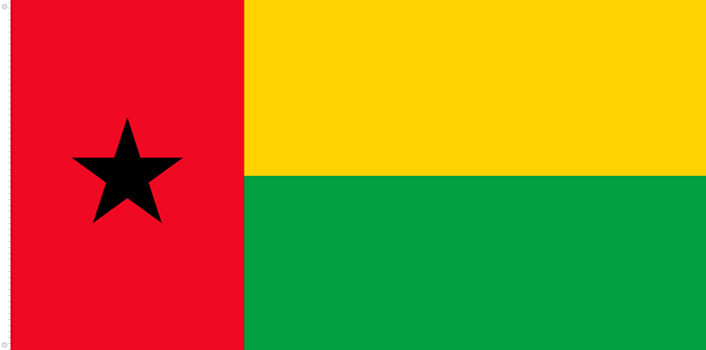
National flag
Ratio: 1 x 2


Like the old flag of Cape Verde, the flag is based on that of the African Party for the Independence of Guinea and Cape Verde (PAIGC). The party was established in 1956 to campaign peacefully for independence from Portugal during its Estado Novo regime, but turned to armed conflict in the 1960s and was one of the belligerents in the 1963 Guinea-Bissau War of Independence. -1974. It remains the dominant party in Guinea-Bissau. The PAIGC party flag was derived from that of Ghana, which was the first design to use the pan-African combination of red, yellow, green and black in 1957.
The colors are typical of Pan-Africanism with a specific meaning for each element:
- Red represents the blood shed by combatants fighting for freedom in the jungles of Guinea. Many soldiers died for the independence of Guinea and Cape Verde, former Portuguese colonies until independence in 1975.
- Green is the future path, vegetation and hope in the struggle.
- Yellow is the color of gold. Cabral said that the unity between us and Africa is more precious than gold.
- The black star represents the unity of Africa. The five points of the black star are the five senses of man: sight, hearing, taste, smell and touch.
ICONOGRAPHY

Star
MEANING
It represents the emancipation of Africa and the unity against colonialism. The five points represent the five senses of man.
CONSTRUCTION

A : 4 | B : 8 | C :3 | D : 2 | E : 2
COLORS
39 %
Red
HEX CODE
# ce1126
SYMBOLIZES:
REPRESENTS THE BLOOD SPILLED BY FIGHTERS IN THE FIGHT FOR FREEDOM
39 %
Yellow
HEX CODE
# fcd116
SYMBOLIZES:
REPRESENTS GOLD AND THE STRENGTH OF UNITY
17 %
Green
HEX CODE
# 009e49
SYMBOLIZES:
REPRESENTS HOPE AND VEGETATION
17 %
Black
HEX CODE
# 000000
HISTORIA
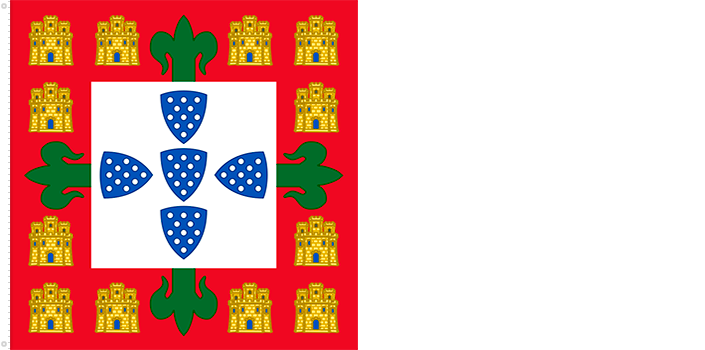
Bandera colonial
portuguesa
1446 - 1485

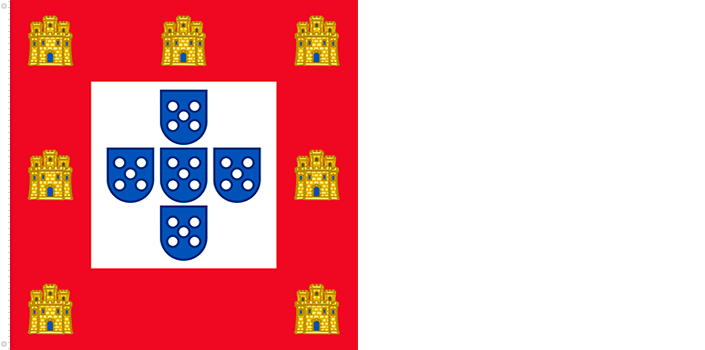
Bandera colonial
portuguesa
1485 - 1495

Bandera colonial
portuguesa
1495 - 1521
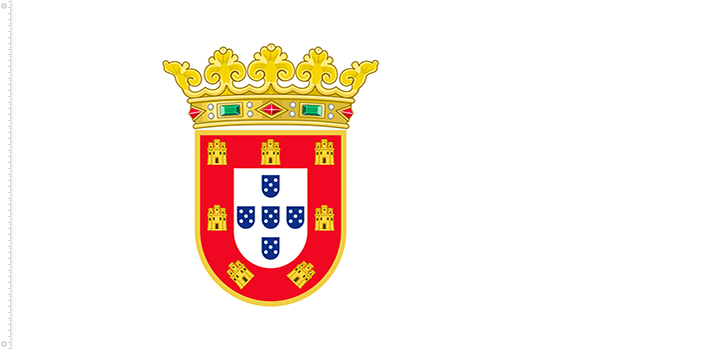
Bandera colonial
portuguesa
1521 - 1578

Bandera colonial
portuguesa
1578 - 1640

Bandera colonial
portuguesa
1640 - 1667
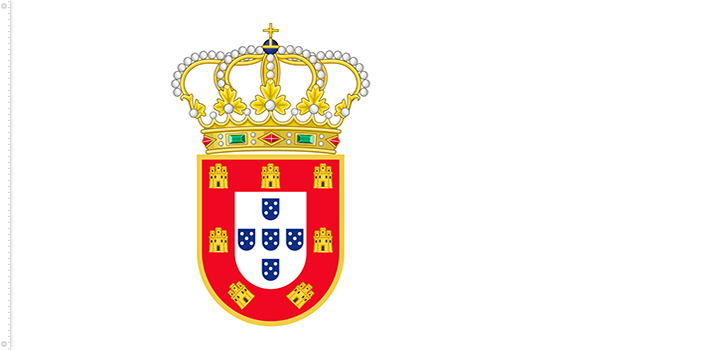
Bandera colonial
portuguesa
1667 - 1707

Bandera colonial
portuguesa
1707 - 1816
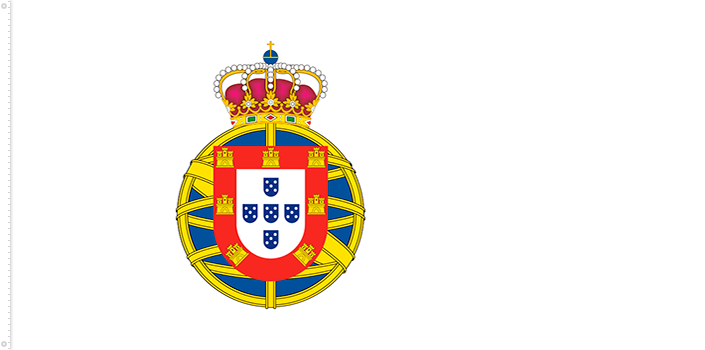
Bandera colonial
portuguesa
1816 - 1830

Bandera colonial
portuguesa
1830 - 1911
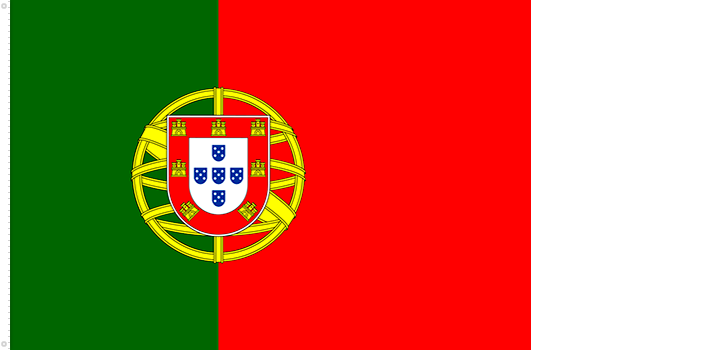
Bandera colonial
portuguesa
1911 - 1974
SHIELD
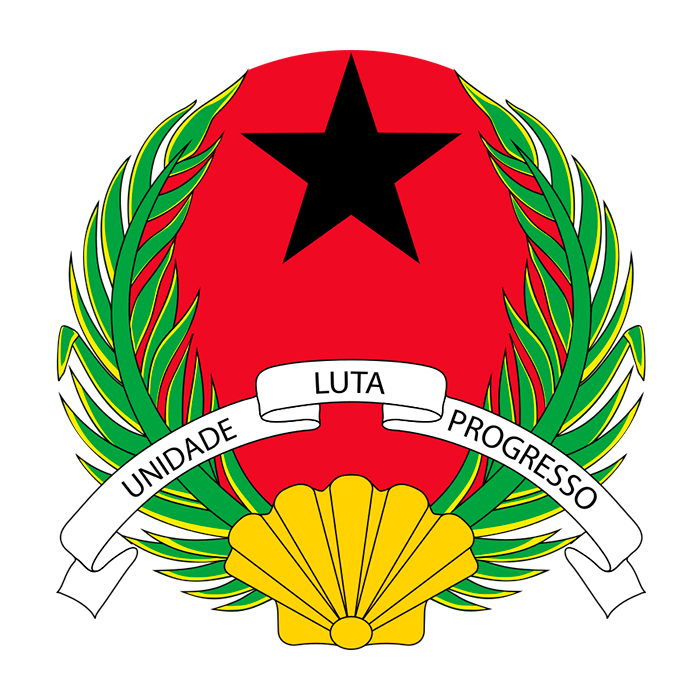
The Constitution of the Republic of Guinea-Bissau in Article 22 (1) states that "The national symbols of the Republic of Guinea-Bissau are the Flag, the Arms and the Anthem". Paragraph 3 of the same article states that "The Arms of the Republic of Guinea-Bissau consist of two palms arranged in a circle, joined by the base on which is a yellow shell, and joined by a ribbon bearing the motto "UNIDADE LUTA PROGRESSO" (in Spanish, "Unity, Fight, Progress" ). In the upper central part there is a black five-pointed star on a gules field.