BRAZIL
WORLD FLAGS
SITE ON THE ORIGIN, DESIGN AND SYMBOLOGY OF THE FLAGS OF THE WORLD
#C / COLOMBIA / South America
COLOMBIA
.CO
Official name:
Republic of Colombia
Capital: Bogota
Idiom: Spanish
Form of Government: Decentralized unitary democratic presidential republic
Currency: Weight
Demonym: Colombian/-na
Administrative divition: 32 Departments and 1 Federal District
FLAG
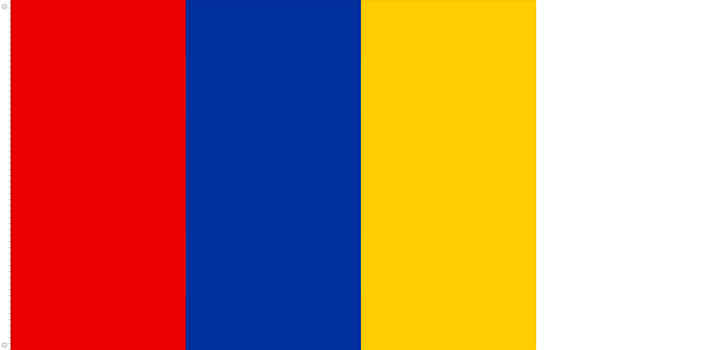
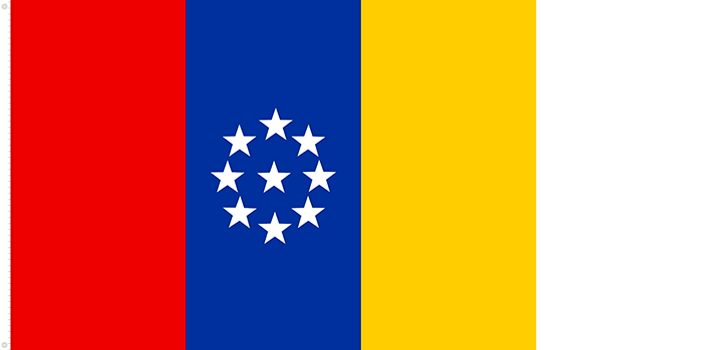
The Colombian flag has its origin in the flag created in 1801 by the Venezuelan patriots Francisco de Miranda and Lino de Clemente for the First Republic of Venezuela, and approved by the Constituent Congress of that country in 1811.
The colors were adopted successively by the Congresses of Gran Colombia, on December 17, 1819, and of the Republic of New Granada, on May 9, 1834. The current arrangement of the same was definitively adopted on November 26, 1861, and its regulation given by decrees No. 861 of May 17, 1924 and No. 62 of January 11, 1934.
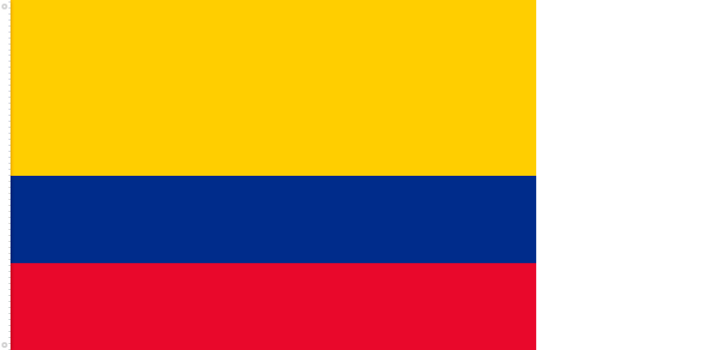
National flag
Ratio: 3 x 5


The national flag of Colombia is described as a rectangle in yellow, blue and red triband in a ratio of 2:1:1. The dimensions of the flag had not been defined since its adoption in 1861. Resolution No. 04235 of 1965 of the Ministry of Defense finally established that the ratio should always be 2:3.
The first description of the colors that the flag has, as well as the interpretation of their meaning, is attributed to the Patriot Francisco Antonio Zea, who declared during his speech at the Angostura Congress of 1819 (congress in which the Great Colombia) the following:
"...Our national flag must have three stripes of different colors: the first be yellow, to signify the peoples who love and love the federation; the second be blue, the color of the seas, to show the despots of Spain that The immensity of the ocean separates us from its ominous yoke, and the third red, in order to make the tyrants understand that before accepting the slavery they have imposed on us for three centuries, we want to drown them in our own blood..."
This interpretation, according to the turbulent times of the Latin American revolution, is not the one used in the present. According to the modern interpretation of the colors, these mean: Yellow: represents the richness of the Colombian soil, as well as the sun, source of light, and sovereignty, harmony and justice. Blue: represents the sky that covers the country, the rivers and the two oceans that bathe the Colombian territory. Red: represents the blood shed by patriots on the battlefields to achieve freedom, which means love, power, strength and progress.
OTHER FLAGS
According to current regulations, the Colombian flag has certain characteristics according to the usage that is given to it by diplomatic, civil or military bodies.
MERCHANT FLAG
The Diplomatic and Merchant Flag is used by merchant marine ships and civil aircraft, as well as by embassies, legations and consulates. It has the same colors and proportions as the national flag but has an oval-shaped shield in the center with a blue background, surrounded by a red velvet area and with a white eight-pointed star in the center.
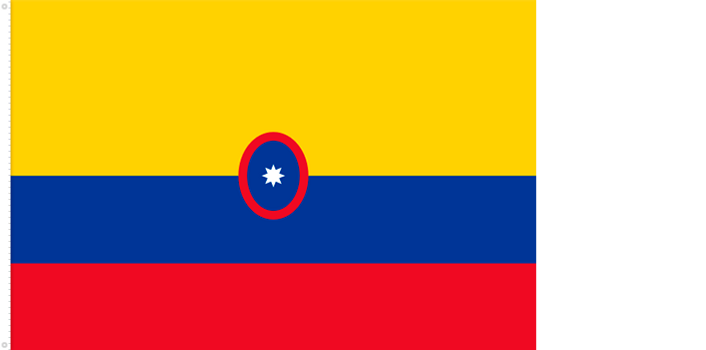
merchant flag
Ratio: 2 x 3


WAR FLAG
Decree No. 861 of 1924 declares that the flag that bears the national coat of arms in its center is called the War Flag, which indicates the existence of a state of war or membership in a military institution. The colors and proportions are the same as that of the national flag. This flag must bear in its center the coat of arms of the Republic, framed in a circumference of red velvet, within which is inscribed, in gold letters, the name of the body of troops to which it belongs.
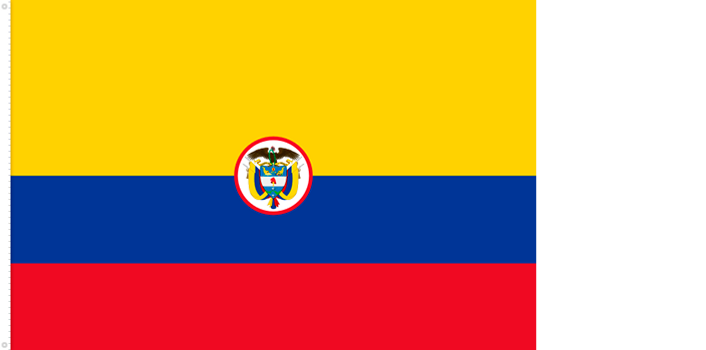
war flag
Ratio: 2 x 3

PRESIDENTIAL FLAG
The Presidential Flag is used by the President of Colombia who, as Commander-in-Chief of the Armed Forces of the Country, would have to be the only civilian who, in times of peace, would point to the national coat of arms on his ensign. It was adopted on November 9, 1949. It consists of the same national flag, with the same proportions and colors, containing in its center the coat of arms of the Republic embroidered on a white circle with a red border. containing the inscription "República de Colombia" at the top, and occasionally "Presidencia", "President" or "Libertad y Orden" at the bottom, always in gold letters.
Presidential Flag
Ratio: 2 x 3

CONSTRUCTION
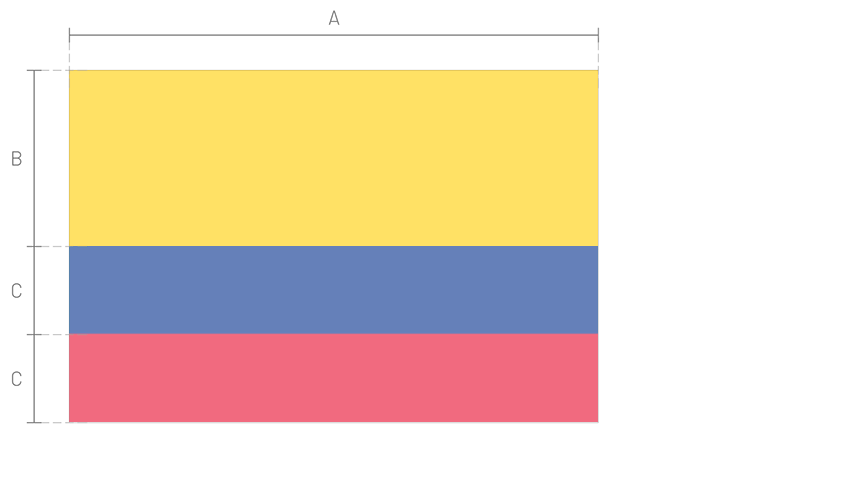
To : 6 | B : 2 | C : 1
COLORS
50 %
Yellow
HEX CODE
# ffcd00
SYMBOLIZES:
REPRESENTS THE WEALTH OF THE SOIL, THE SUN, SOVEREIGNTY, HARMONY AND JUSTICE
25 %
Blue
HEX CODE
# 003087
SYMBOLIZES:
REPRESENTS THE SKY THAT COVERS THE COUNTRY, THE RIVERS AND THE TWO OCEANS THAT BATH THE TERRITORY, THE ATLANTIC AND THE PACIFIC
25 %
Red
HEX CODE
# c8102e
SYMBOLIZES:
REPRESENTS THE BLOOD SHED BY THE PATRIOTS
HISTORY
Flag of the Provinces
Nations of New Granada

1814 - 1815
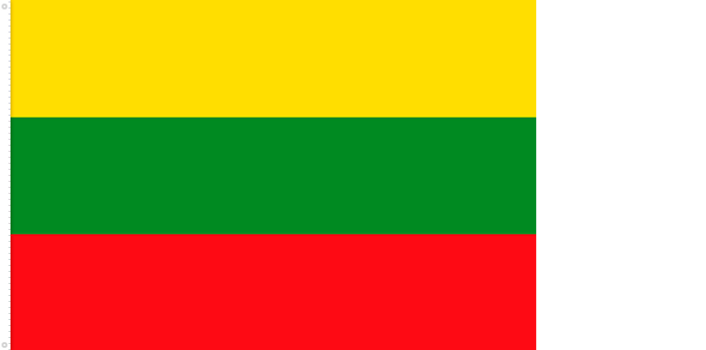
Flag of the Provinces
Nations of New Granada
1815 - 1819
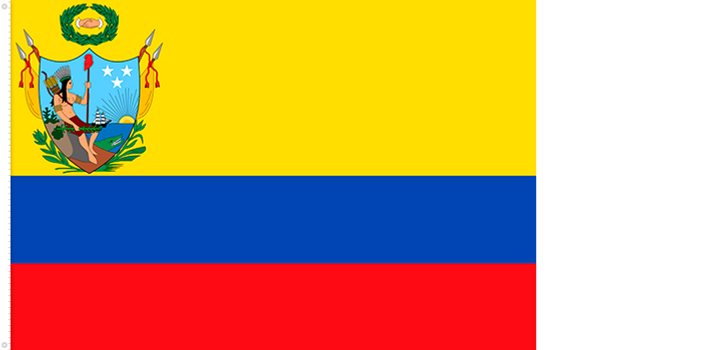
flag of the
Great Columbia
1819 - 1820
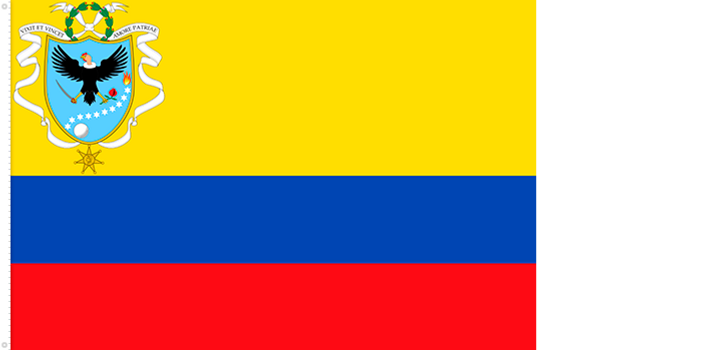
flag of the
Great Columbia
1820 - 1821
flag of the
Great Columbia
1821 - 1830
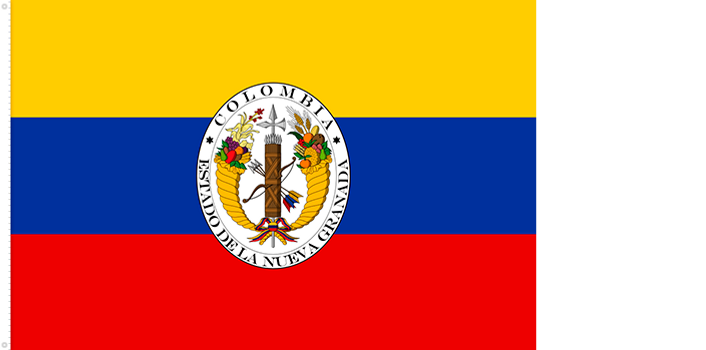
state flag
from New Grenada
1830 - 1834
republic flag
from New Grenada
1834 - 1861
Flag of United
States of New Granada
1861
REGIONAL FLAGS

Flag
of
Bogota Capital District

flag of the
Department of
Amazon

flag of the
Department of
Antioch
flag of the
Department of
Arauca
flag of the
Department of
Atlantic
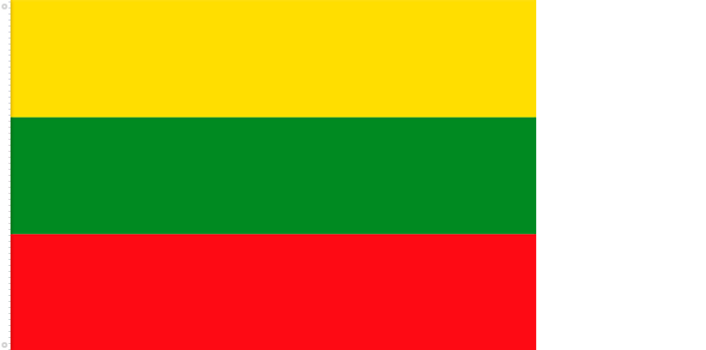
flag of the
Department of
Bolivar
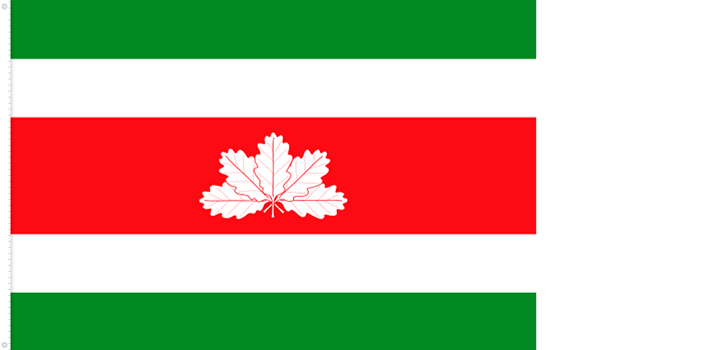
flag of the
Department of
Boyaca

flag of the
Department of
Caldes
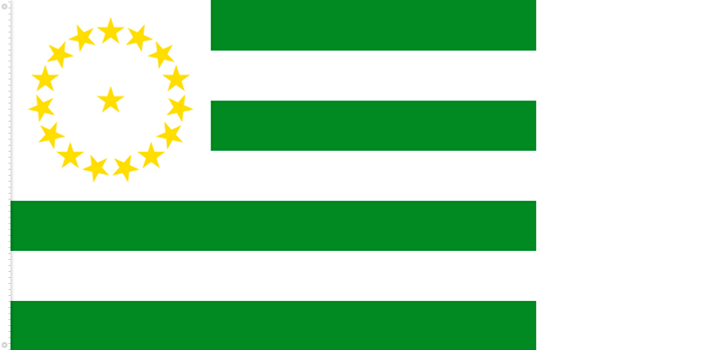
flag of the
Department of
Caqueta
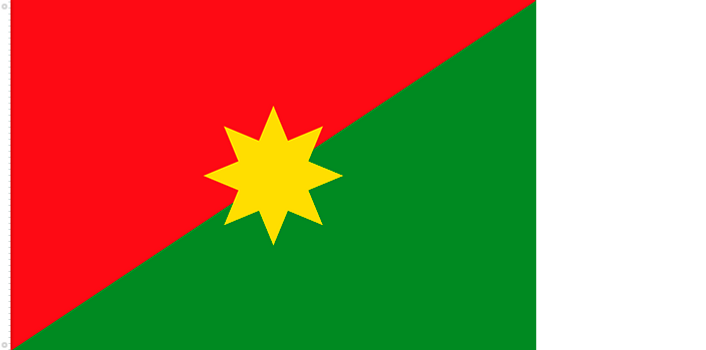
flag of the
Department of
Casanare
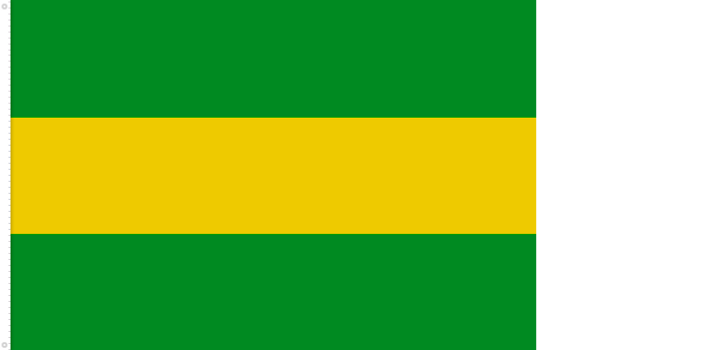
flag of the
Department of
Cauca

flag of the
Department of
cease
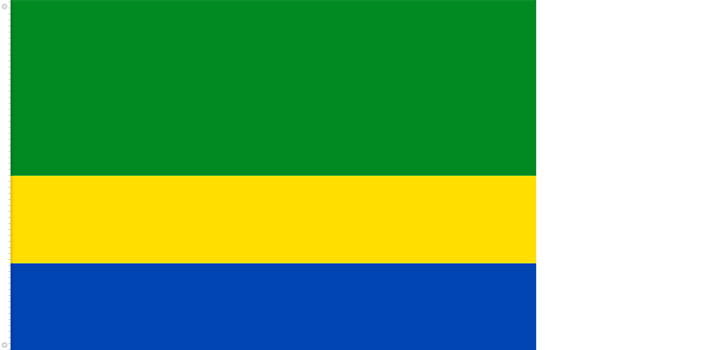
flag of the
Department of
collided
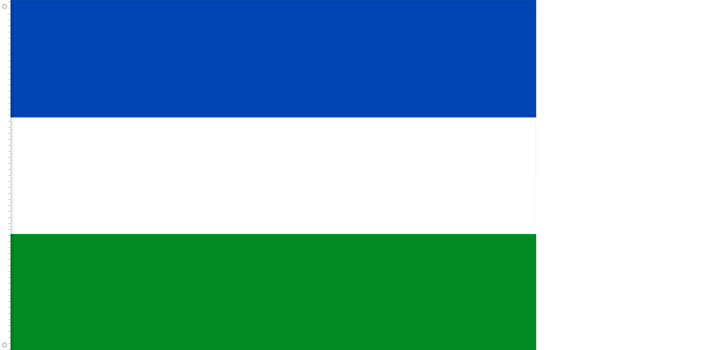
flag of the
Department of
Cordova
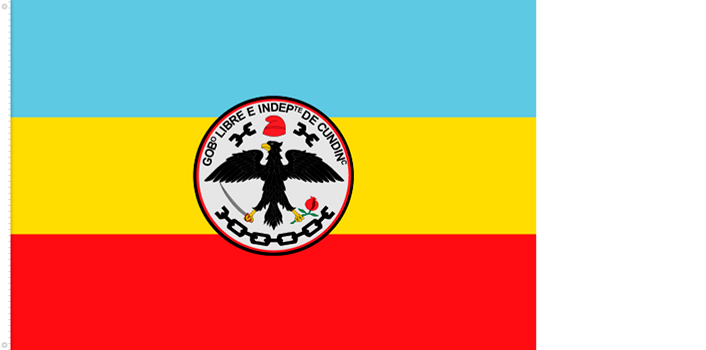
flag of the
Department of
Cundinamarca

flag of the
Department of
Guainia
flag of the
Department of
Guaviare

flag of the
Department of
huila

flag of the
Department of
La Guajira
flag of the
Department of
cupcake
flag of the
Department of
Goal
flag of the
Department of
Narino
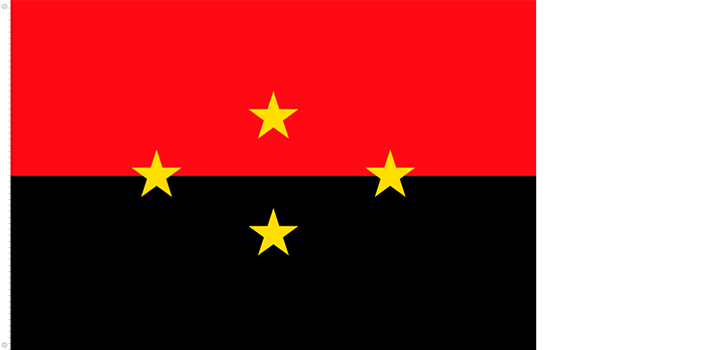
flag of the
Department of
North of Santander

flag of the
Department of
Putumayo
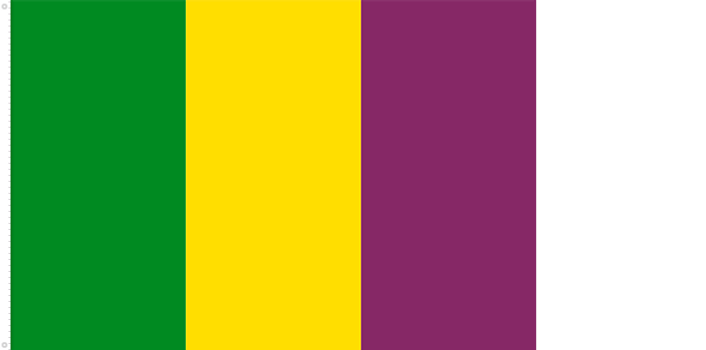
flag of the
Department of
Quindio

flag of the
Department of
Risaralda

flag of the
Department of
San Andres and Providence

flag of the
Department of
Santander

flag of the
Department of
Sucre
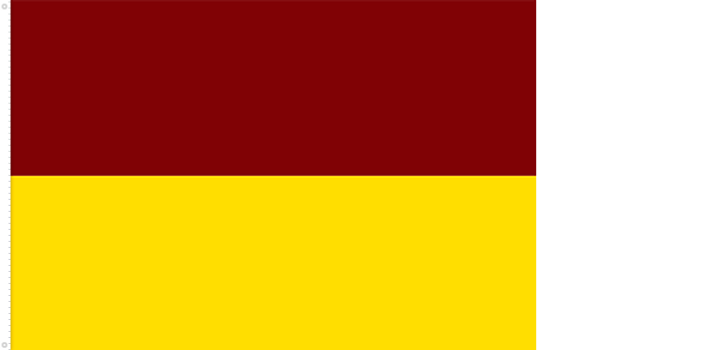
flag of the
Department of
Tolima

flag of the
Department of
Cauca's Valley
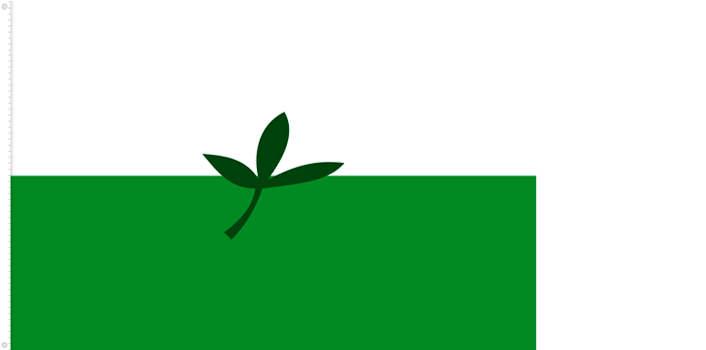
flag of the
Department of
Vaupes

flag of the
Department of
vichada

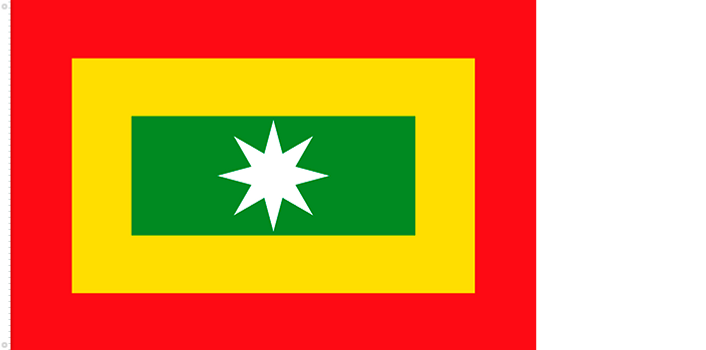
District Flag
Special of
Barrancabermeja
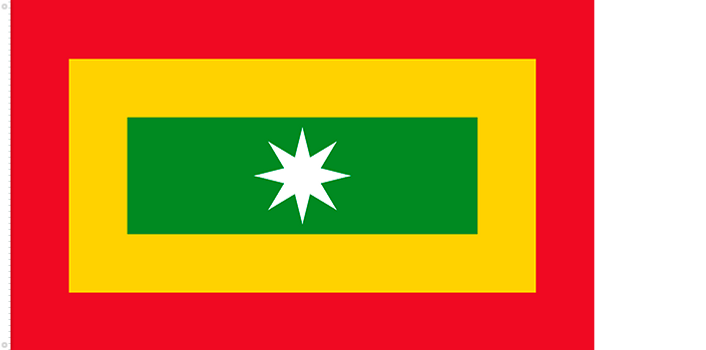
District Flag
Special of
Barranquilla

District Flag
Special of
Bonaventure
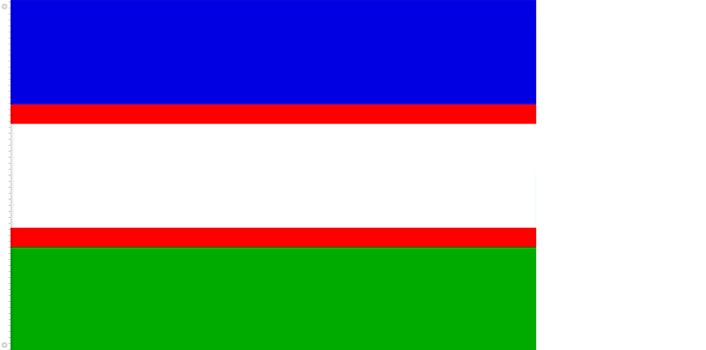
District Flag
Special of
Cali
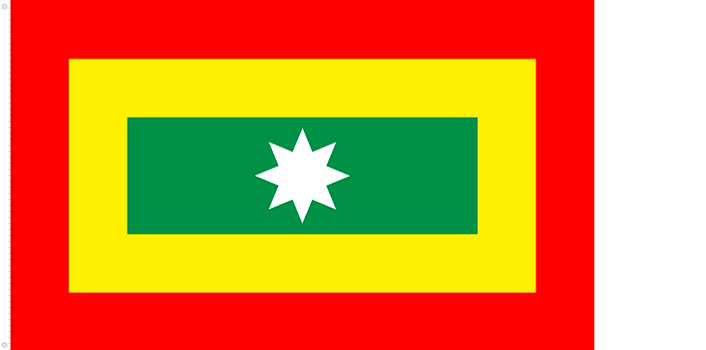
District Flag
Special of
Cartagena de Indias
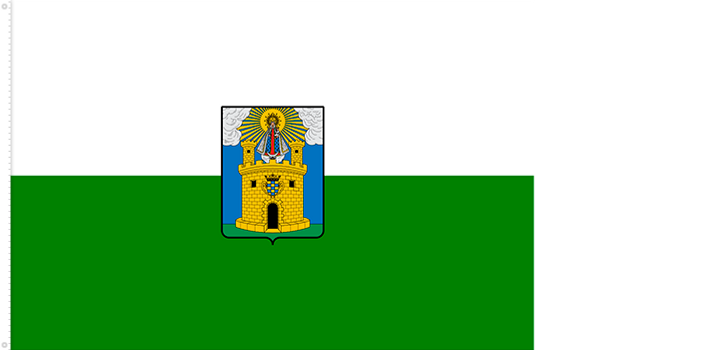
District Flag
Special of
Medellin

District Flag
Special of
Mompox
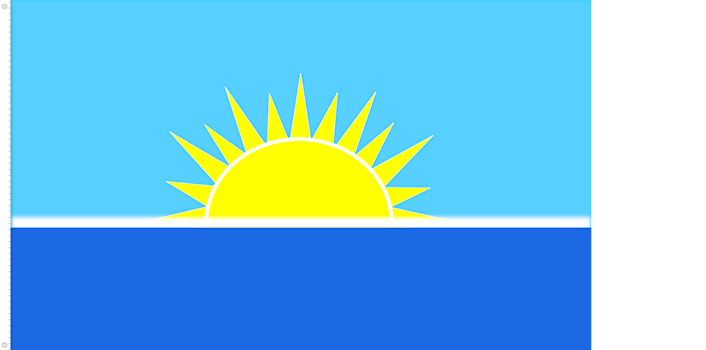
District Flag
Special of
Riohacha

District Flag
Special of
Santa Marta

District Flag
Special of
Turbo
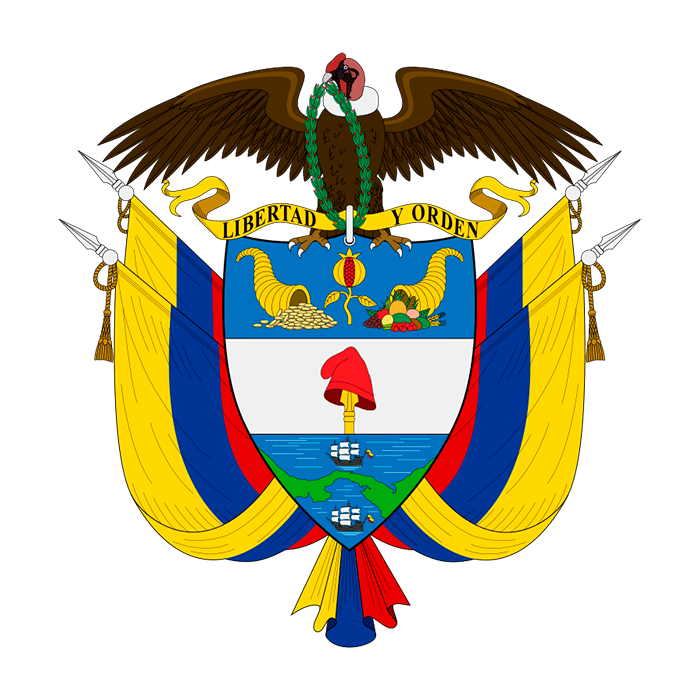
SHIELD
The current emblem and its constituent elements have their origins in the coat of arms approved by Law 3 of May 9, 1834, when General Francisco de Paula Santander was president of the Republic of New Granada. The colors and their arrangement were successively adopted and reaffirmed by several decrees. Finally, the coat of arms is regulated by decree No. 3558 of November 9, 1949, which also describes in a timely manner the reproduction of most of its parts.
According to the laws enacted on May 9, 1834, May 17, 1924 and November 9, 1949, the national coat of arms of Colombia consists of the following elements:
The coat of arms is Swiss in shape, divided into three equal stripes. In the upper strip, on a blue field, there is a gold pomegranate with stems and leaves in the center, open and in its center grained with red, reminiscent of New Granada, a name that the country carried until the mid-nineteenth century. . On the sides are two cornucopias: the one on the right with gold coins and the one on the left with tropical fruits. These horns symbolize the wealth and abundance of the Colombian soil.
The middle sash, on a platinum field, is a red Phrygian cap mounted on a spear, which recalls the spirit of the republic and, in turn, is a universal symbol of freedom.
In the lower strip is the isthmus of Panama surrounded by marine waters, on which two ships with unfurled sails are located, one appears in each Ocean: the Pacific and the Atlantic, as a symbol that Colombia is the only South American country bathed by two seas. The unfurled sails signify Colombia's trade with the other countries of the world.
Above the head of the shield is the Condor, which is the patriotic bird of the country and symbolizes freedom, it is represented from the front, with outstretched wings and looking to the right; From its beak hangs a crown of green laurels and a waving gold ribbon attached to the shield and intertwined in the crown, in which the words Liberty and Order, the country's national motto, appear in black letters.
The shield rests on four divergent flags at the base.