
BRAZIL
WORLD FLAGS
SITE ON THE ORIGIN, DESIGN AND SYMBOLOGY OF THE FLAGS OF THE WORLD
Official name:
Republic of Korea
*Korean hangul / 대한민국-
daehan minguk
*Korean hanja / 大韓民國 -
daehan minguk
Capital: Seoul
Idiom: Korean
Form of Government: Presidential republic
Currency: South Korean Won
Demonym: South Korean/-na * Korean/-na * South Korean/-na
Administrative divition: 9 provinces, 1 special city and 6 metropolitan cities

#C / SOUTH KOREA / Asia
KOREA
FROM THE SOUTH
.KR
FLAG
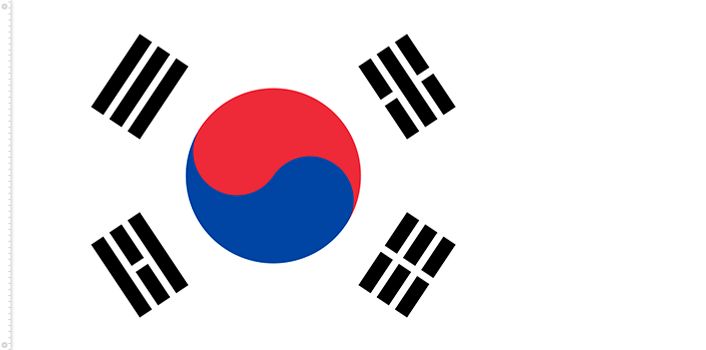
The flag of South Korea, also known as the Taegukgi, has three parts: a white rectangular background, a red and blue Taegeuk in its center, and four black trigrams, one in each corner. Flags similar to today's Taegeukgi were used as the national flag of Korea by the Joseon dynasty, the Korean Empire, and the Korean government-in-exile during Japanese rule. South Korea adopted the Taegukgi as its national flag when it gained independence from Japan on August 15, 1945.
National flag
Ratio: 2 x 3


The field of the flag is white, a traditional color in Korean culture. White was common in everyday clothing for Koreans in the 19th century, and it still appears in contemporary versions of traditional Korean clothing, such as hanbok. The color represents peace and purity.
The circle in the center of the flag symbolizes the balance in the universe. The red half represents the positive cosmic forces and the blue half represents the opposing negative cosmic forces.
Together, the trigrams represent movement and harmony as fundamental principles. Each trigram (hangeul: 괘 [gwae]; hanja: 卦) represents one of the four classical elements, as described below:
☰ Geon - Sky | ☷ Gon - Earth | ☵ Gam - Water (Moon) | ☲ Gi - Fire (Sun)
OTHER FLAGS
Naval Pavilion
Ratio: 2 x 3


Presidential Banner
Ratio: 2 x 3
Standard of the Prime Minister
Ratio: 2 x 3
ICONOGRAPHY

Circle
MEANING
태극
Taegeuk.
It represents the Ying Yang, symbolizes the balance in the universe.

Geon
MEANING
건
This trigram represents the sky, spring, the east cardinal point, the father and humanity.

Ri
MEANING
리
This trigram represents fire, the sun, autumn, the south cardinal point, the daughter and justice.

gam
MEANING
감
This trigram represents water, the moon, winter, the north cardinal point, the son and intelligence.

gon
MEANING
곤
This trigram represents the earth, summer, the west cardinal point, the mother and courtesy.
CONSTRUCTION

A : 48 | B : 96 | S : 144 | D : 24
E : 16 | F : 11
COLORS
78 %
White
HEX CODE
#ffffff
IT REPRESENTS:
TRADITIONAL COLOR OF KOREAN CULTURE. REPRESENTS PEACE AND PURITY
7 %
Red
HEX CODE
# cd2e3a
IT REPRESENTS:
THE YANG. THE POSITIVE ASPECT
7 %
Blue
HEX CODE
# 0047a0
8 %
Black
HEX CODE
# 000000
IT REPRESENTS:
THE YING. THE NEGATIVE ASPECT
HISTORY

Flag of
Korea

1882

Flag of
Korea
1888
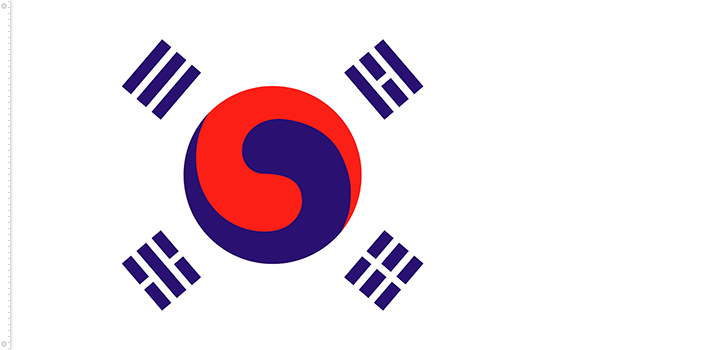
flag of the
korean empire
1897 - 1910

government flag
Provisional Korea
1910 - 1945

republic flag
korean folk
1945 - 1946

Flag of
Korea
1945 - 1948
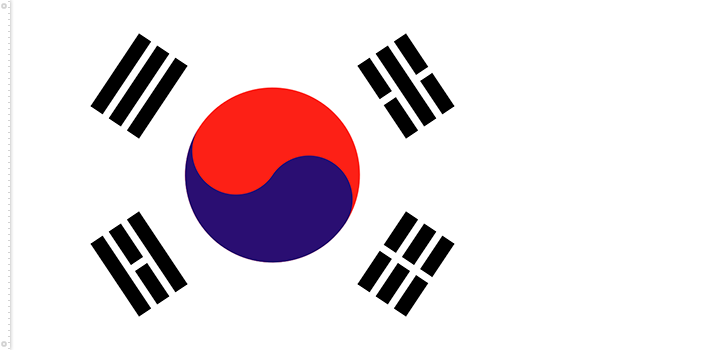
Flag of
South Korea
1948 - 1949
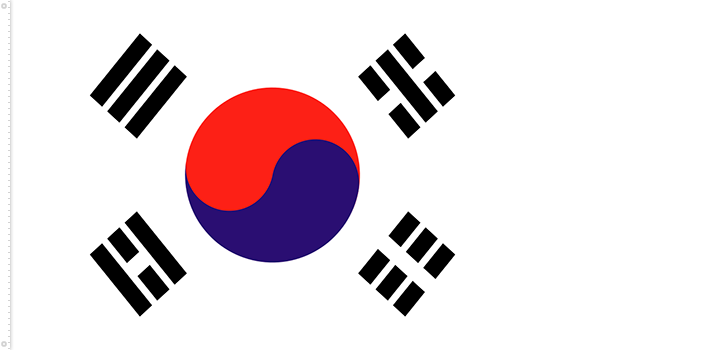
Flag of
South Korea
1949 - 1984
Flag of
South Korea
1984 - 1997

Flag of
South Korea
1997 - 2011
REGIONAL FLAGS

flag of the
special city of
seoul

city flag
Autonomous Special of
sejong
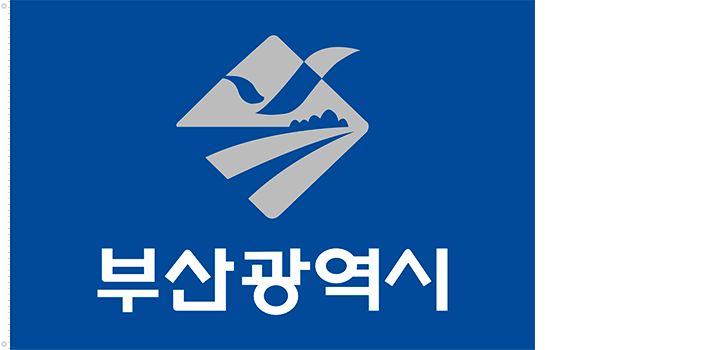
city flag
Metropolitan of
busan
city flag
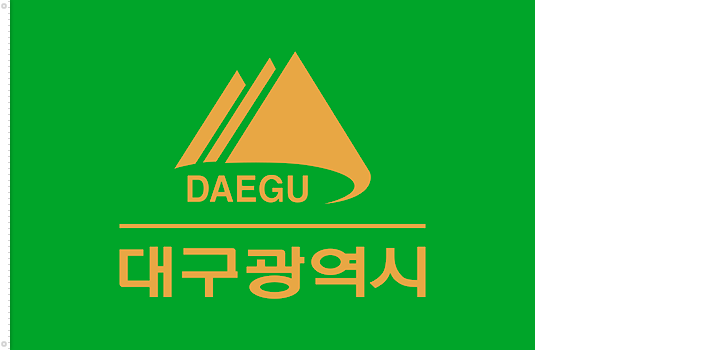
Metropolitan of
Daegu

city flag
Metropolitan of
Daejeon

city flag
Metropolitan of
Gwangju

city flag
Metropolitan of
Incheon

city flag
Metropolitan of
Ulsan
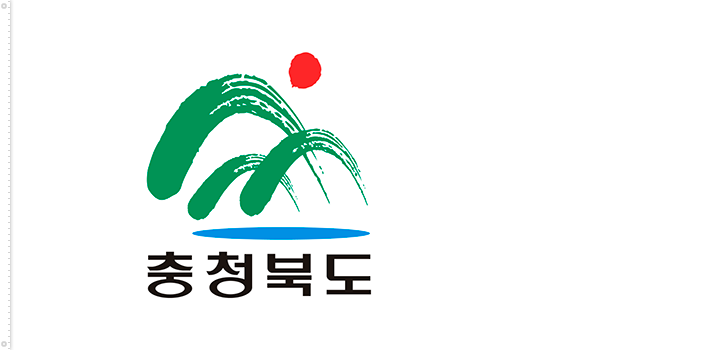
flag of the
Province of
North Chungcheong

flag of the
Province of
Chungcheongnam-do

flag of the
Province of
gang-won
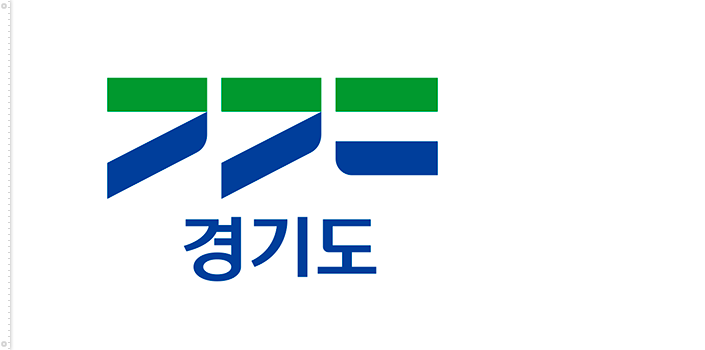
flag of the
Province of
gyeonggi
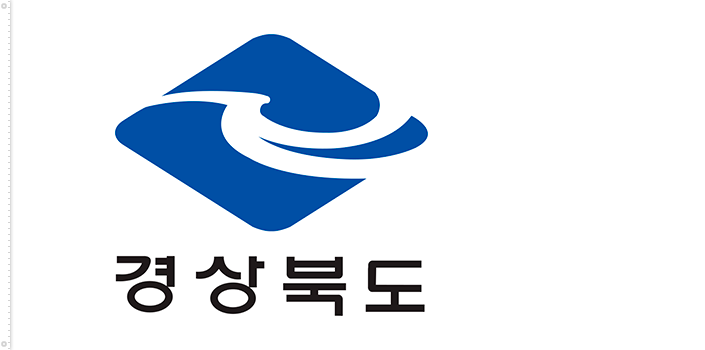
flag of the
Province of
North Gyeongsang

flag of the
Province of
South Gyeongsang
flag of the
Province of
North Jeolla
flag of the
Province of
South Jeolla

Province Flag
Autonomous Special
jeju
SHIELD
The national emblem of South Korea is composed of the Yin and Yang symbol ("Taegeuk") which also appears on the national flag. It is surrounded by five petals of Mugunghwa or Syrian Rose, the national flower of South Korea, and a ribbon with the inscription "Republic of Korea" ("Daehan Minguk"), in Hangul characters.
