BRAZIL
WORLD FLAGS
SITE ON THE ORIGIN, DESIGN AND SYMBOLOGY OF THE FLAGS OF THE WORLD

#B / BAHAMAS / Central America and the Caribbean
BAHAMAS
.BS
Official name:
Commonwealth of the Bahamas
*English / Commonwealth of The Bahamas
Capital: Nassau
Idiom: English
Form of Government: Parliamentary monarchy
Currency: Bahamian dollar
Demonym: Bahamian/-ña *
Bahamian/-esa
Administrative divition: 32 Local Districts and 1 Central District
FLAG
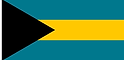
The national flag of Barbados was officially adopted on July 10, 1973, replacing the British Blue Ensign. It has been the flag of the Bahamas since its independence that same year. It was designed by Dr. Hervis Bain.

National flag
Ratio: 1 x 2


The flag of the Bahamas is made up of three horizontal stripes of equal width, the upper and lower ones turquoise, and the central one yellow. At the inner end, the flag features a black equilateral triangle with the base along the pole, pointing toward the outer fringe.
The colors of the flag have cultural, political and regional meanings. The gold alludes to the shining sun as well as other key terrestrial natural resources, while the aquamarine personifies the water that surrounds the country. The black symbolizes the "strength", "vigour, and strength" of the Bahamian people, while the directed triangle evokes their "enterprising and determined" nature to cultivate the abundant natural resources on land and in the sea.
OTHER FLAGS

naval flag
Ratio: 1 x 2


Merchant Navy Flag
Ratio: 1 x 2

ICONOGRAPHY

Triangle
MEANING
The equilateral triangle evokes the enterprising and determined nature of the Bahamian people to cultivate the country's resources.
CONSTRUCTION

To : 12 | B : 3 | C : 2 | D : 60º | E : 5 | F : 7
COLORS
58 %
Turquoise
HEX CODE
# 00778b
SYMBOLIZES:
REPRESENTS THE WATER SURROUNDING THE ISLANDS
21 %
Yellow
HEX CODE
# ffc72c
SYMBOLIZES:
REPRESENTS THE SUN AND NATURAL RESOURCES
21 %
Black
HEX CODE
# 000000
SYMBOLIZES:
REPRESENTS THE STRENGTH AND VIGOR OF THE PEOPLE
HISTORY

colonial flag
bahamian

1964 - 1973

colonial flag
bahamian
1964 - 1973

colonial flag
bahamian
1964 - 1973
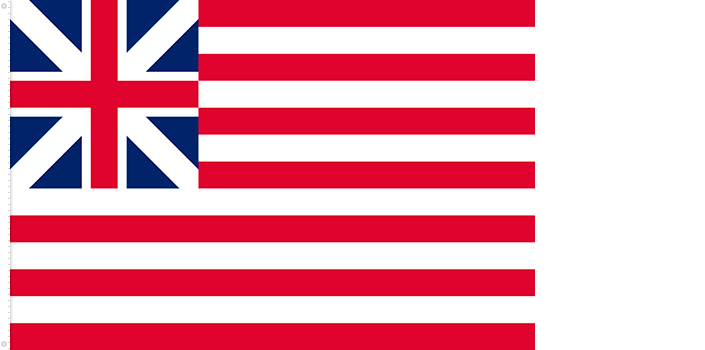
colonial flag
bahamian
1964 - 1973
colonial flag
bahamian
1964 - 1973
colonial flag
bahamian
1964 - 1973
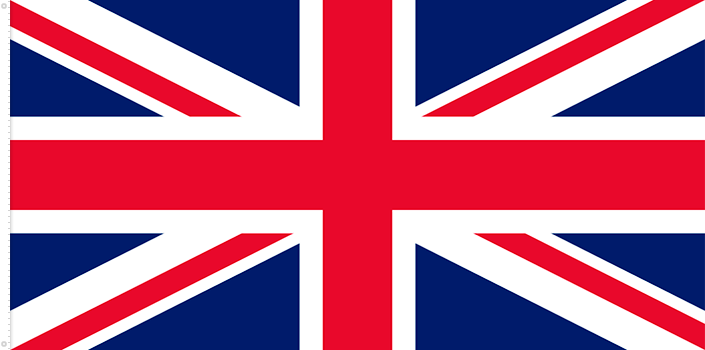
colonial flag
bahamian
1964 - 1973

colonial flag
bahamian
1964 - 1973
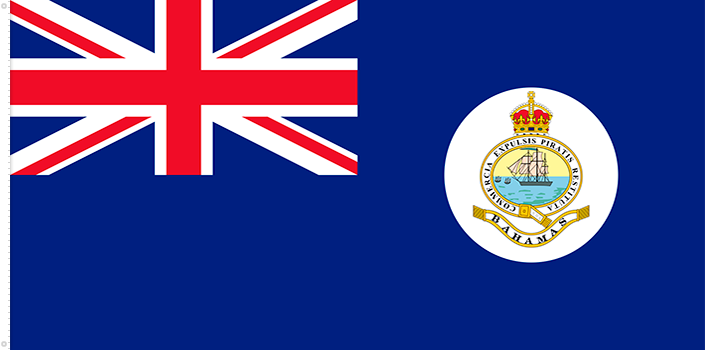
colonial flag
bahamian
1964 - 1973

colonial flag
bahamian
1964 - 1973
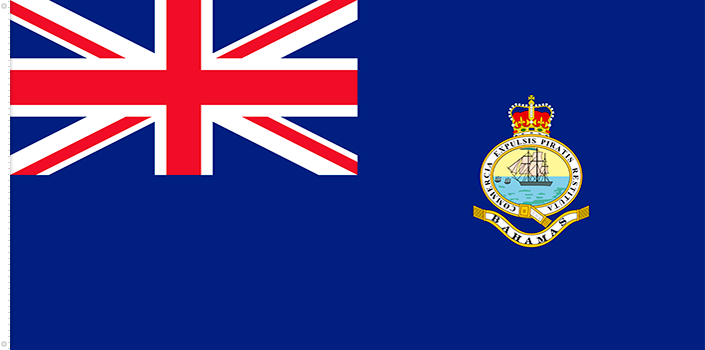
colonial flag
bahamian
1964 - 1973
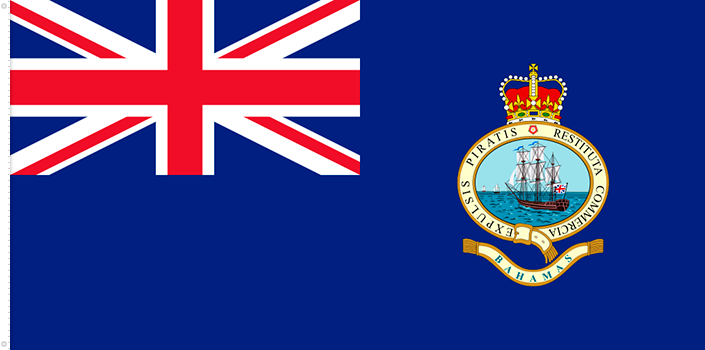
colonial flag
bahamian
1964 - 1973
SHIELD
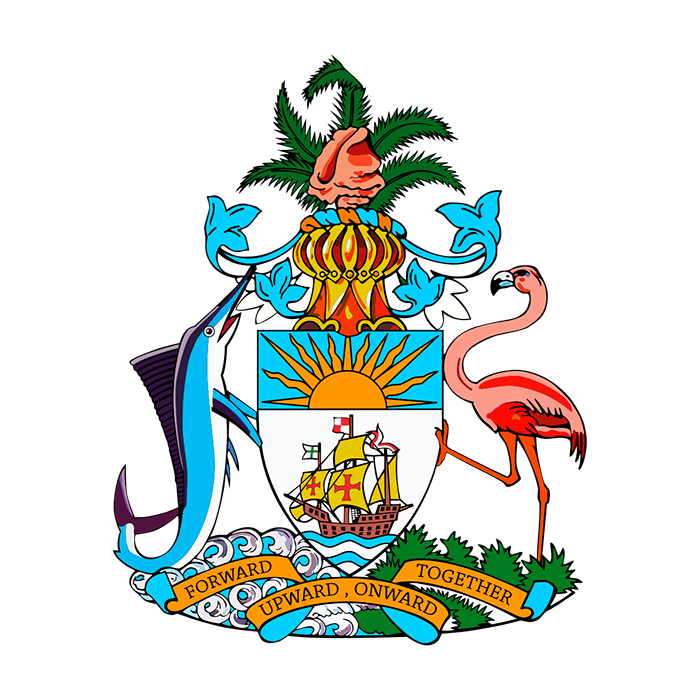
The coat of arms of the Bahamas was approved on December 7, 1971, during the period of British administration, and granted by Queen Elizabeth II; It is the work of local artist Hervis L. Bain.
In a silver field, a ship is represented on waves of azure and silver. The ship in question is the Santa María of Christopher Columbus, who discovered the Bahamas on his first voyage; in fact, the island of Guanahani was the first territory of the New World that the navigator set foot on. On the head, in azure, is charged a golden rising sun, a symbol of the warm climate for which the islands are known and also an allusion to the bright future of the country.
It has the two national animals as supports: a marlin on the right and a flamingo on the left, on a terrace with the national motto in English: FORWARD, UPWARD, ONWARD TOGETHER (in Spanish, "Forward, upward, let's advance together" ). The marlin rests on a sea of waves and the flamingo rests on land, as a representation of the geography of the islands.
As a bell, a helmet with gold and azure lambrequins, added to a burelete that contains the same colors where a pink shell rests on top of some palm leaves, signs alluding to the marine fauna and typical vegetation of the archipelago.