BRAZIL
WORLD FLAGS
SITE ON THE ORIGIN, DESIGN AND SYMBOLOGY OF THE FLAGS OF THE WORLD

#AND / ECUADOR / South America
ECUADOR

.EC
Official name:
Republic of Ecuador
Capital: Quito
Idiom: Spanish
Form of Government: Presidential republic
Currency: American dollar
Demonym: Ecuadorian/-na
Administrative divition: 24 Provinces
FLAG
The national flag of Ecuador is a rectangular cloth made up of three horizontal stripes and bears the national coat of arms in the center for official uses. Due to its common origin, the Ecuadorian flag is similar to the flag of Colombia and that of Venezuela, which are also former constitutive territories of Gran Colombia. It has its origin in the flag created by the Venezuelan patriots Francisco de Miranda and Lino de Clemente for the United Provinces of Venezuela and approved by the Constituent Congress of 1811.

National flag
Ratio: 2 x 3


In November 2009, Ecuador's National Secretary of Communication issued a regulation outlining the applications and proportions of the national flag.
The flag will have a ratio of 2 to 3. The field is divided into three horizontal bands of color, a yellow band half the width of the flag, a blue band a quarter width and a red band a quarter width. .
Miranda attributed the colors he chose for his flag to Johan Wolfgang von Goethe's primary color theory. In a letter written to Count Semyon Romanovich Vorontsov in 1792, Miranda describes a late-night conversation with Goethe at a party in Weimar, Germany, during the winter of 1785. Fascinated by Mirando's account of his exploits in the War of Independence of the United States and his travels through America and Europe, Goethe told him: "Your destiny is to create in your land a place where the primary colors are not distorted".
The first time the flag was flown by Miranda was in 1806 on the ship Leander when he was attempting to engage Spanish forces off the coast of Jacmel, Haiti. The colors of the modern Ecuadorian flag evolved from those of the flag of the nation of Gran Colombia.
The yellow color represents the abundance of the mining and fertile soil of the country. Blue represents the Ecuadorian sky and sea. And the red represents the blood shed by the heroes who brought their countrymen and freedom to their fellow citizens.
OTHER FLAGS
According to Registry 1272, a decree signed into law on December 5, 1900, there are two official designs of the national flag. Article 2 establishes the national flag as a tricolor field (yellow, blue and red). Article 3 establishes that the national flag loaded with the Ecuadorian national coat of arms must be used by military government offices, diplomatic agents outside of Ecuador, fortresses and warships, as well as national organizations. The same decree establishes that the civil population must use the flag mentioned in article 2.
For Municipal governments, article 4 prohibits the use of the national flag with the coat of arms. For the use by the municipalities, a flag with the same colors and proportions as the national flag was adopted, which instead of a shield bears a set of white stars that are placed in a circular pattern centered on the blue stripe. The number of stars correspond to the number of provinces in Ecuador.

civil flag
Ratio: 2 x 3


Municipal Flag
Ratio: 2 x 3


Presidential Flag
Ratio: 1 x 1
CONSTRUCTION
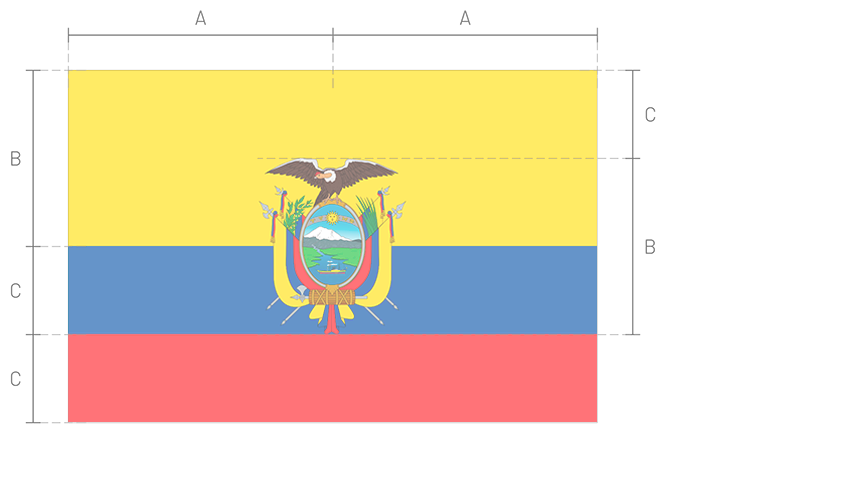
To : 3 | B : 2 | C : 1
COLORS
50 %
Yellow
HEX CODE
# ffdd00
SYMBOLIZES:
REPRESENTS ABUNDANCE OF THE MINING AND FERTILIZED SOIL OF THE COUNTRY
25 %
Blue
HEX CODE
# 034ea2
SYMBOLIZES:
REPRESENTS THE ECUADORIAN SKY AND SEA
25 %
Red
HEX CODE
# ed1c24
SYMBOLIZES:
REPRESENTS THE BLOOD SHED BY THE HEROES
HISTORY

flag of the Province
Free from Guayaquil

1820 - 1822

flag of the
Great Columbia
1822 - 1837

flag of the Province
Free from Guayaquil
1820 - 1822

flag of the
Great Columbia
1822 - 1837

Ecuadorian flag on the
Great Columbia
1822
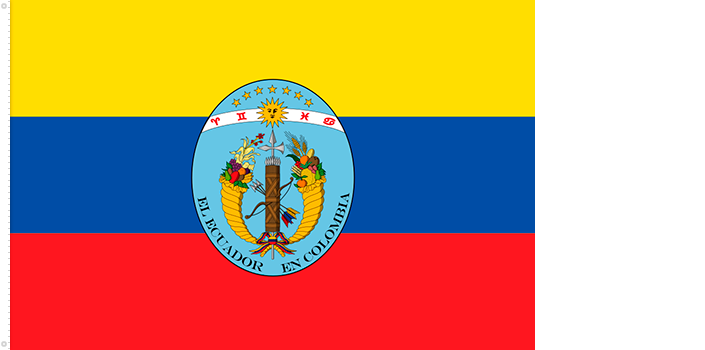
Flag of
Ecuador
1830 - 1835
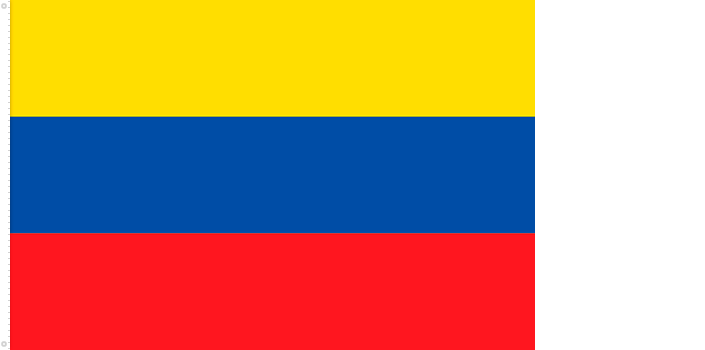
Flag of
Ecuador
1835 - 1845

Flag of
Ecuador
1845

Flag of
Ecuador
1845 - 1860
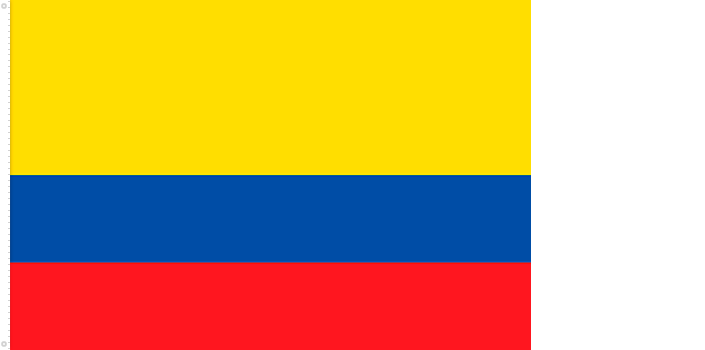
Flag of
Ecuador
1845

Flag of
Ecuador
1845 - 1860
REGIONAL FLAGS

flag of the
Province of
Azuay

flag of the
Province of
Bolivar

flag of the
Province of
Canar

flag of the
Province of
Carchi
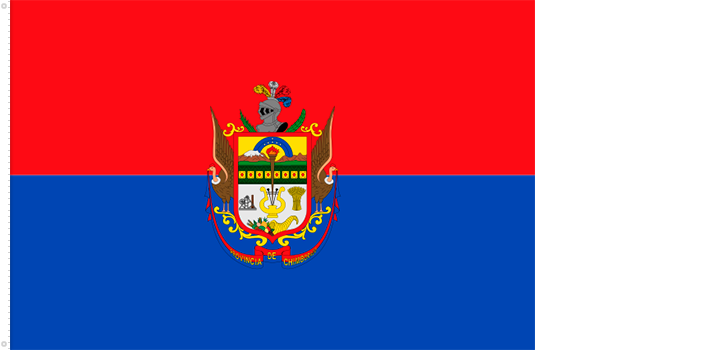
flag of the
Province of
Chimborazo

flag of the
Province of
Cotopaxi
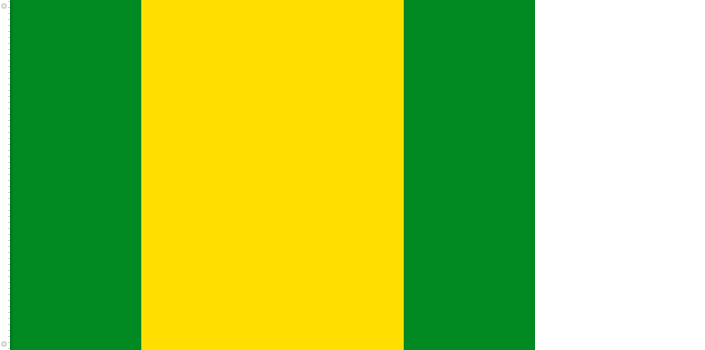
flag of the
Province of
Gold

flag of the
Province of
emeralds

flag of the
Province of
Galapagos

flag of the
Province of
Guayas

flag of the
Province of
Imbabura

flag of the
Province of
store

flag of the
Province of
The rivers

flag of the
Province of
Manabi

flag of the
Province of
Morona-Santiago
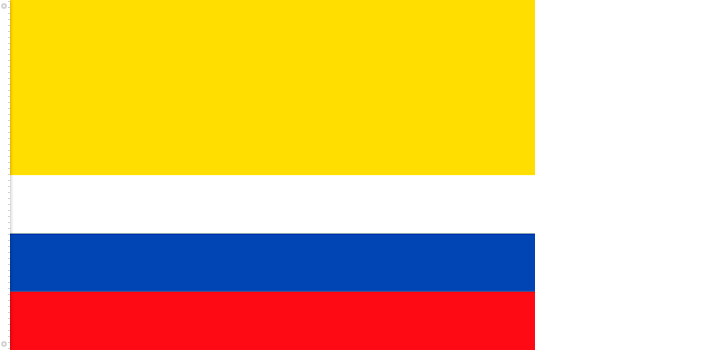
flag of the
Province of
Napo

flag of the
Province of
Orellana

flag of the
Province of
pasta

flag of the
Province of
Pichincha

flag of the
Province of
st. Helen

flag of the
Province of
Santo Domingo de los Tsachilas

flag of the
Province of
Succumbs

flag of the
Province of
Tungurahua

flag of the
Province of
Zamora Chinchipe
SHIELD
The coat of arms of Ecuador was officially adopted by Congress on October 31, 1900, achieving its implementation in the presidency of General Eloy Alfaro Delgado, on November 7 of the same year.
Various sources indicate that the artistic design of the current coat of arms belongs to the master Pedro Pablo Traversari, establishing himself until 1916 when it was approved by the Ministry of Public Instruction.
It is an oval shield. In the upper part of the interior the sun is represented, in the center of a part of the zodiac where the signs Aries, Taurus, Gemini and Cancer are found. These signs correspond to the historical months of March, April, May and June of 1845, in their order, during which time the struggle lasted between the revolutionaries led by the Provisional Government installed in Guayaquil and the Government of General Juan José Flores who clung to power.
In the inner part, cutting the horizon, Chimborazo, one of the highest mountains in the Andes, under a blue sky. The Guayas River is born from the snows of Chimborazo and this flow that flows down the fertile lands of the coast, symbolizes the brotherhood of all Ecuadorians.
A steamboat crosses the wide part of the river. It is an allusion to the first steamship built on the Pacific coast, in the Guayaquil shipyards, in 1841, and has a caduceus as a mast, a symbol of navigation and commerce.
Above all, the Condor that presents freedom.
The shield rests on consular fasces, an emblem of republican authority made up of a bundle or bundle of rods tied with a bead, which wraps an axe.
Four national flags surround the shield, two of them on a spear shaft, the main weapon used in the struggles for independence, and two on a halberd shaft, which symbolize the custody of the constituted power; and, in the middle of them, two branches appear, one is of palm and symbolizes the martyrdom of those who gave us freedom, and another of laurel that symbolizes triumph and glory.