
BRAZIL
WORLD FLAGS
SITE ON THE ORIGIN, DESIGN AND SYMBOLOGY OF THE FLAGS OF THE WORLD

#C / CHILE / South America
CHILI

.CL
Official name:
the Republic of Chile
Capital: Santiago de Chile
Idiom: Spanish
Form of Government: Unitary presidential democratic republic
Currency: Peso
Demonym: Chilean/-na
Administrative divition: 16 Regions
FLAG
The national flag of Chile, known as the Solitary Star, was officially adopted on October 18, 1817. It is divided into two horizontal stripes: the upper one is one third turquoise blue and two thirds white, while the lower one is red; in the blue canton there is a white five-pointed star.
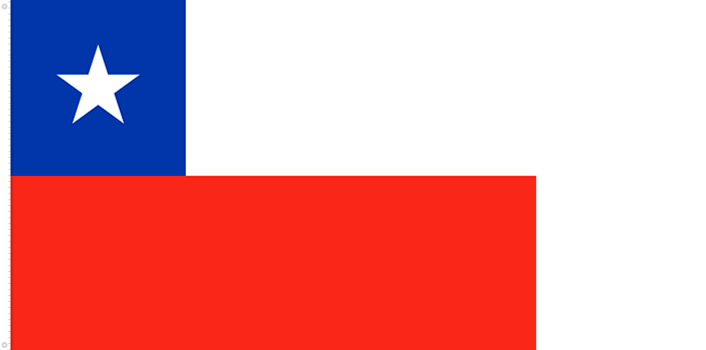
National flag
Ratio: 2 x 3


The most common interpretations of the use of the colors of the flag would attribute to blue the representation of the sky, to white the snowy peaks of the Andes Mountains, and to red the blood shed by national heroes in the war for independence. In turn, the star would symbolize the three powers of the Chilean State (Executive, Legislative and Judicial) that watch over the integrity of the nation, and its uniqueness would be a reference to the Unitary State.
However, considering the verses of Canto XXI of the epic poem La Araucana (1569), the colors would go back to the tricolor flags used by the Mapuche toquis during the Arauco War against the Spanish conquest, while the pentagram would represent the "star of Arauco" -the planet Venus- according to Bernardo O'Higgins.
OTHER FLAGS

Naval Pavilion
Ratio: 1 x 1

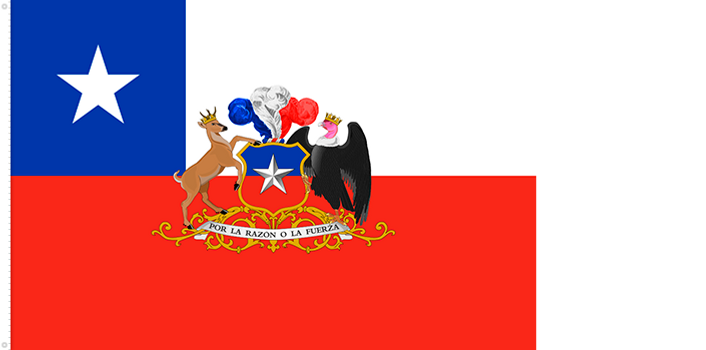
Presidential Flag
Ratio: 2 x 3
ICONOGRAPHY

Star
MEANING
It represents the "star of Arauco", the planet Venus.
CONSTRUCTION
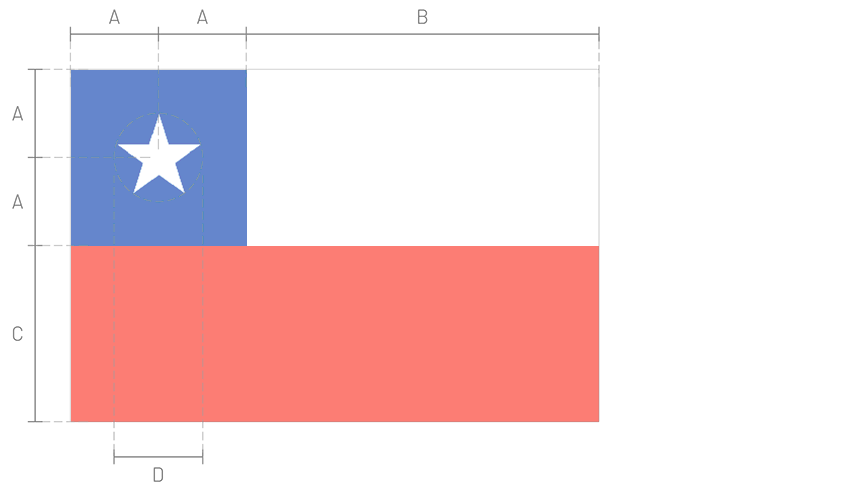
A : 2 | B : 8 | C :4 | D : 2
COLORS
50 %
Red
HEX CODE
# d72b1f
SYMBOLIZES:
THE BLOOD SPILLED BY THE HEROES OF INDEPENDENCE
35 %
White
HEX CODE
#ffffff
SYMBOLIZES:
THE SNOWY PEAKS OF THE ANDES MOUNTAIN RANGE
15 %
Blue
HEX CODE
# 0039a6
SYMBOLIZES:
HEAVEN
HISTORY

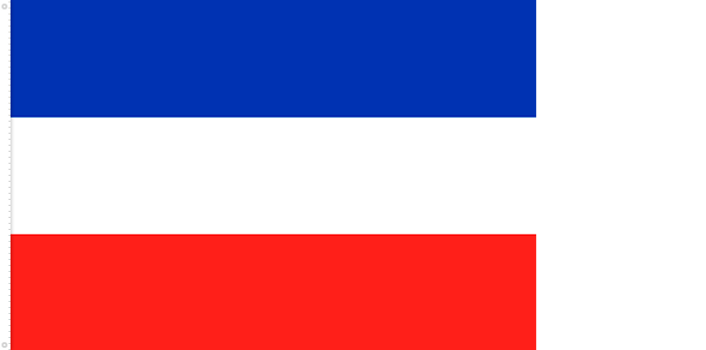
flag of the
old homeland

1812 - 1814

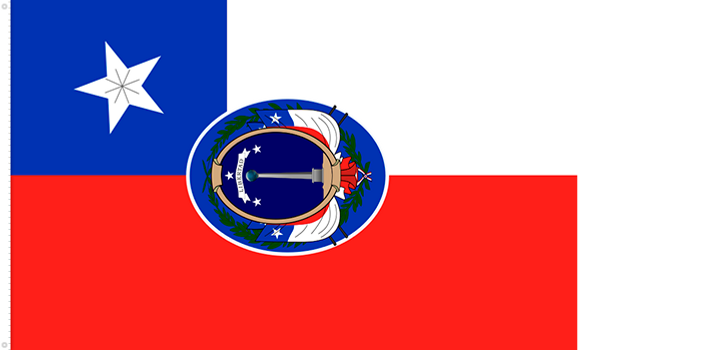
flag of the
Transition
1817 - 1818
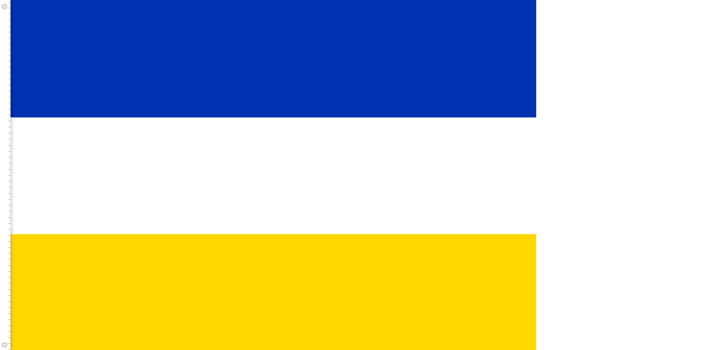
flag of the
old homeland
1812 - 1814
flag of the
Transition
1817 - 1818
first flag of
chili
1818
REGIONAL FLAGS
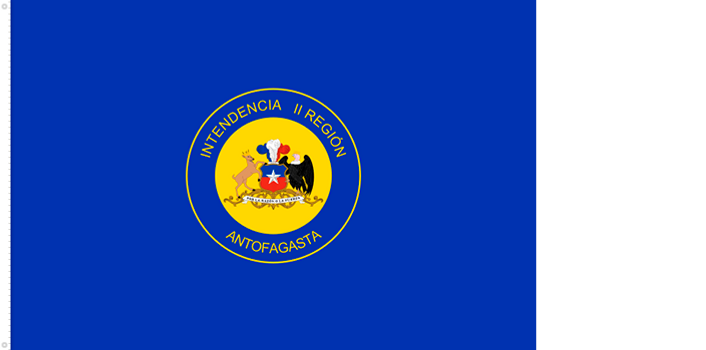
flag of the
region of
Antofagasta

flag of the
region of
Araucania
flag of the
region of
Arica and Parinacota

flag of the
region of
Atacama
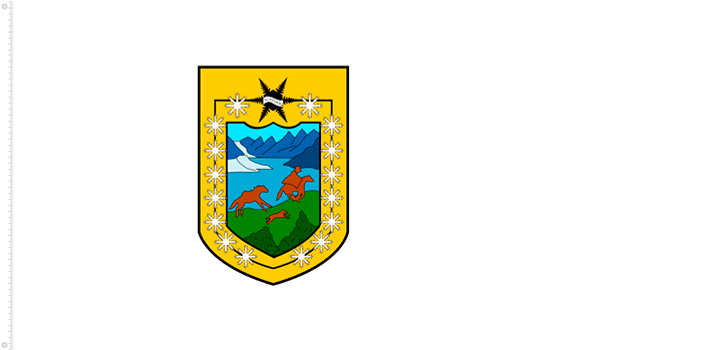
flag of the
region of
Aysén del General Carlos Ibañez del Campo

flag of the
region of
Bio - Bio

flag of the
region of
Coquimbo

flag of the
region of
Liberator General Bernardo O'Higgins

flag of the
region of
The lakes

flag of the
region of
The rivers

flag of the
region of
Magellan and Chilean Antarctica

flag of the
region of
Maule
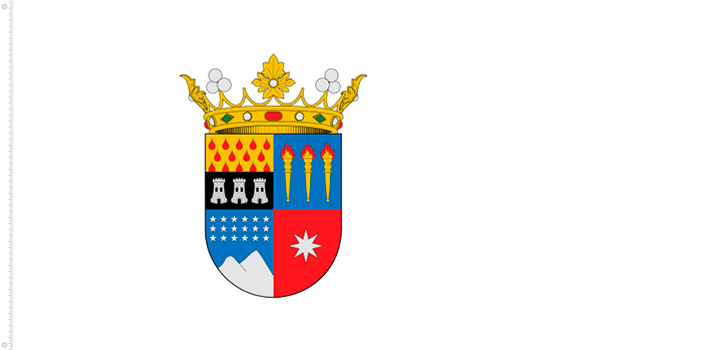
flag of the
region of
cloudy

Flag
of the
Metropolitan region
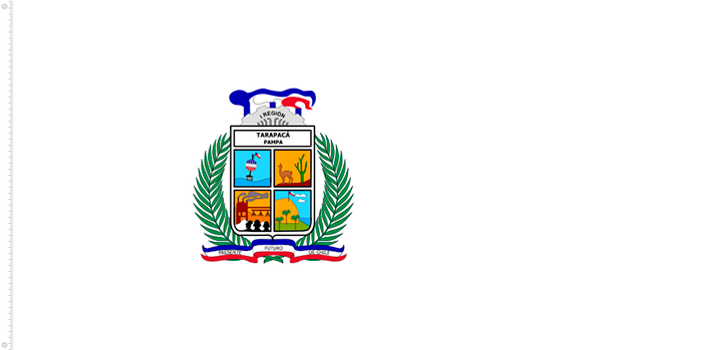
flag of the
region of
Tarapaca

flag of the
region of
Valparaíso
SHIELD
It was created by Decree No. 34 of November 19, 1889. The sword represents kindness; the central round shield, blue in color, contains the constellation of the Southern Cross, one of the consecrated symbols of Brazil. Around the dial there are 20 silver stars representing the 20 states of Brazil (there are currently 27).
The round shield rests on a large star with the national colors, green and yellow: this star represents the federal unit of the country. On the sides of the star there are two plants: on the left the coffee plant and on the right tobacco, the two main products of Brazil in 1889.
The striped gold background represents the dawn of the Republic. It is observed that it forms a large 20-pointed star, again symbolizing the States of the country at that time.
In the lower part, a blue ribbon with the legend "Estados Unidos do Brasil" which was later replaced in 1968 by "República Federativa do Brasil". The date indicated (November 15, 1889) on the tape is the one that corresponds to the proclamation of the Republic.
