BRAZIL
WORLD FLAGS
SITE ON THE ORIGIN, DESIGN AND SYMBOLOGY OF THE FLAGS OF THE WORLD
#AND / UNITED STATES / North America
STATE
UNITED
.US
Official name:
United States of America
*English / United States of America
Capital: Washington D.C.
Idiom: English
Form of Government: presidential federal republic
Currency: US dollar
Demonym: American * American/-na * American/na
Administrative divition: 50 States and 1 Federal District
FLAG
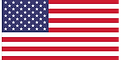
The United States flag has been modified 26 times. The 48-star version lasted 47 years, until the 49-star version was adopted on July 4, 1959. The mark was beaten by the current 50-star version, adopted on July 4, 1960.
Known in the country as the Stars and Stripes, Old Glory and the Star-Spangled Banner— it consists of thirteen horizontal stripes of equal size, seven red and six alternating white, and a blue rectangle in the upper left canton sector with fifty white stars. five pointed. The bars represent the original Thirteen Colonies that became independent from the United Kingdom and the stars, the fifty states that make up the Union.
According to the United States House of Representatives book Our flag, "the colors red, white, and blue had no meaning for the Stars and Stripes when it was adopted in 1777." However, about the colors of the Seal of the United States, adopted in 1782, it says that "white symbolizes purity and innocence, blood red and courage, and sky blue, perseverance and justice."

National flag
Proportion: 10 x 19


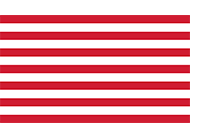
At the time of the Declaration of Independence on July 4, 1776, the United States had no official flag. What is called the American flag never had an official character; it was used during the War of Independence of the United States and served as the basis for the future national flag. That flag is very similar to the flag of the British East India Company (CBIA) and there are those who believe that it was inspired by it. The truth is that the first flag used very similar to that of the CBIA was the Grand Union Flag, also called Continental Colors, Congress Colors, First Navy Ensign or even Cambridge Flag. Such a flag that maintained the version of the Union Jack of its time (that is, a Union Jack with the cross of Saint George bordered in white (symbol of England) on a white Cross of Saint Andrew on a blue background (symbol of Scotland) did not have officer status, although it was the first emblem of the United States Navy before the formal declaration of independence.
Another theory about the origin of the flag is that it was inspired by the coat of arms of George Washington, originally from England.
On June 14, 1777, the Second Continental Congress approved the Flag Resolution, determining that "the flag of the thirteen United States be thirteen alternate red and white bars, that the union be thirteen white stars on a blue field, representing a new constellation ." In fact, June 14th marks Flag Day. Some scholars dispute the arrangement of the stars within the blue canton. Thus, Francis Hopkinson, one of the signers of the Declaration of Independence, attributes the authorship of the flag that bears his name, while another design, with the stars in a circle, is attributed to Betsy Ross, who sewed a flag for George Washington; however, none have historical rigor.
OTHER FLAGS

Naval Pavilion
Ratio: 5 x 7


ICONOGRAPHY
Bars
MEANING
The 13 bars represent the original Thirteen Colonies that gained independence from the United Kingdom.
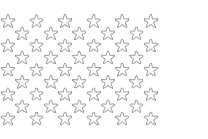
stars
MEANING
They represent the 50 states that make up the Union.
CONSTRUCTION

To : 9876 | B : 14824 | C : 1000 | D : 1400 | I : 1646
COLORS
19 %
Blue
HEX CODE
# 3c3b6e
SYMBOLIZES:
HEAVEN, PERSEVERANCE AND JUSTICE
38 %
White
HEX CODE
#ffffff
SYMBOLIZES:
PURITY AND INNOCENCE
43 %
Red
HEX CODE
# b22234
SYMBOLIZES:
THE BLOOD AND THE VALUE
HISTORY

flag of the
great union

1776 - 1777

First Flag of the
United States of America

1777 - 1795
13 Estrellas - Nuevo Hampshire, Massachusetts, Rhode Island, Connecticut, Nueva York, Nueva Jersey, Pensilvania, Delaware, Maryland, Virginia, Carolina del Norte, Carolina del Sur y Georgia

First Flag of the
United States of America
1777 - 1795
15 Estrellas - Vermont, Kentucky
First Flag of the
United States of America
1777 - 1795
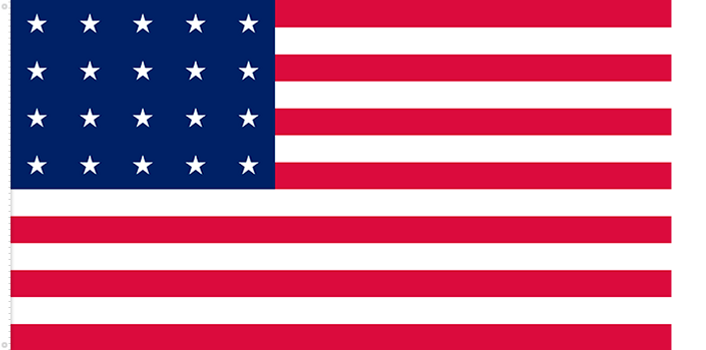
20 Estrellas - Tennessee, Ohio, Luisiana, Indiana, Misisipi

First Flag of the
United States of America
1777 - 1795
21 Estrellas - Illinois

First Flag of the
United States of America
1777 - 1795
23 Estrellas - Alabama, Maine
First Flag of the
United States of America
1777 - 1795
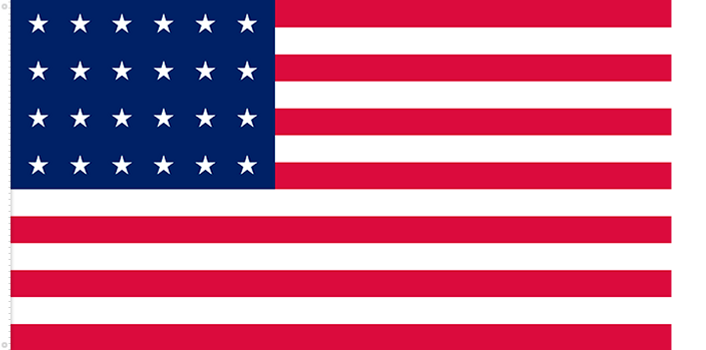
24 Estrellas - Misuri
First Flag of the
United States of America
1777 - 1795
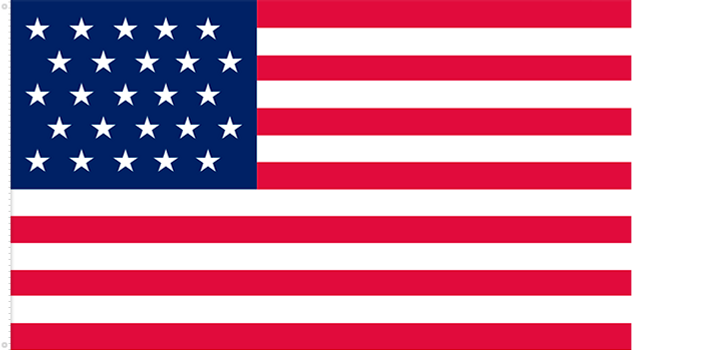
25 Estrellas - Arkansas

First Flag of the
United States of America
1777 - 1795
26 Estrellas - Míchigan

First Flag of the
United States of America
1777 - 1795
27 Estrellas - Florida

First Flag of the
United States of America
1777 - 1795
28 Estrellas - Texas

First Flag of the
United States of America
1777 - 1795
29 Estrellas - Iowa

First Flag of the
United States of America
1777 - 1795
30 Estrellas - Wisconsin

First Flag of the
United States of America
1777 - 1795
31 Estrellas - California

First Flag of the
United States of America
1777 - 1795
32 Estrellas - Minnesota

First Flag of the
United States of America
1777 - 1795
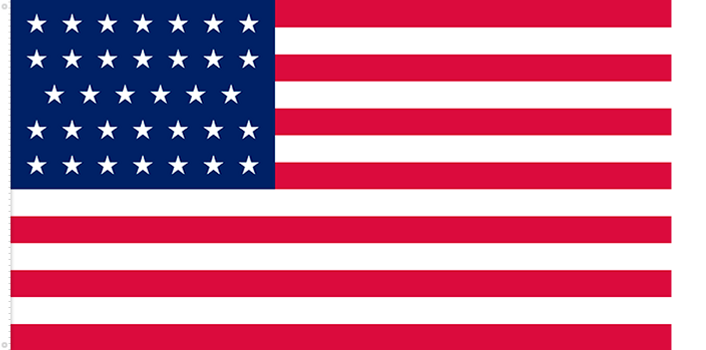
33 Estrellas - Oregón
First Flag of the
United States of America
1777 - 1795
34 Estrellas - Kansas

First Flag of the
United States of America
1777 - 1795
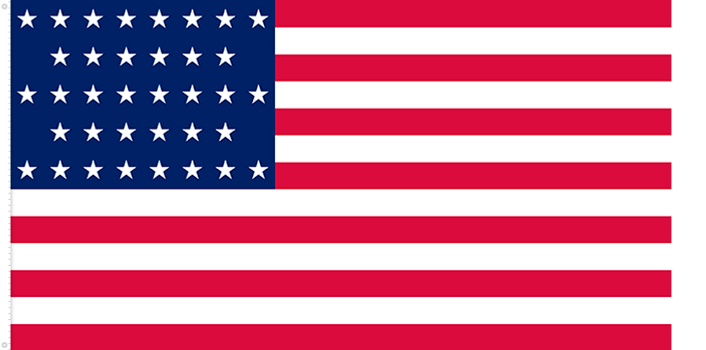
35 Estrellas - Virginia Occidental
First Flag of the
United States of America
1777 - 1795
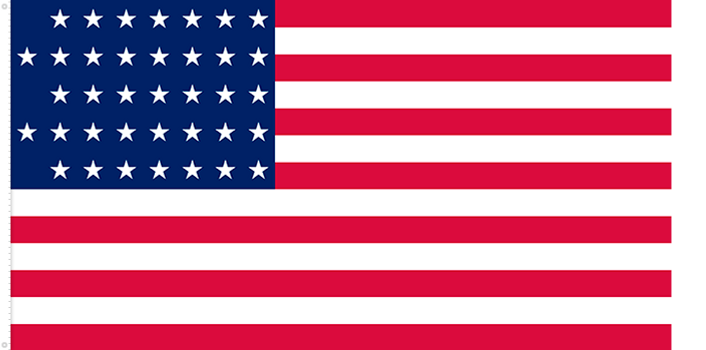
36 Estrellas - Nevada
First Flag of the
United States of America
1777 - 1795
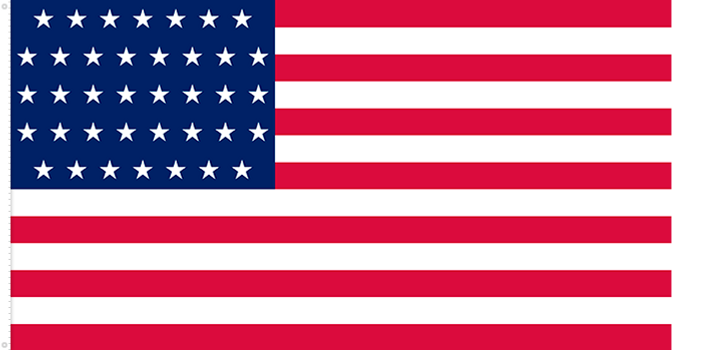
37 Estrellas - Nebraska
First Flag of the
United States of America
1777 - 1795
38 Estrellas - Colorado

First Flag of the
United States of America
1777 - 1795
43 Estrellas - Idaho, Montana, Dakota del Norte, Dakota del Sur, Washington

First Flag of the
United States of America
1777 - 1795
44 Estrellas - Wyoming

First Flag of the
United States of America
1777 - 1795
45 Estrellas - Utah

First Flag of the
United States of America
1777 - 1795
46 Estrellas - Oklahoma

First Flag of the
United States of America
1777 - 1795
48 Estrellas - Arizona, Nuevo México

First Flag of the
United States of America
1777 - 1795
49 Estrellas - Alazka
REGIONAL FLAGS

Flag
of
District of Columbia

flag of the
State
Alabama

flag of the
State
Alaska

flag of the
State
Arizona
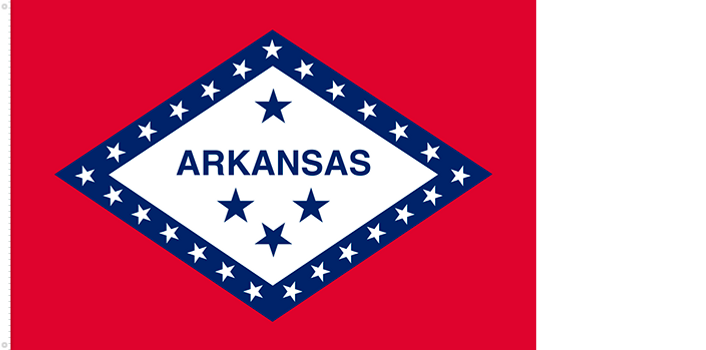
flag of the
State
Arkansas

flag of the
State
California

flag of the
State
Colorado
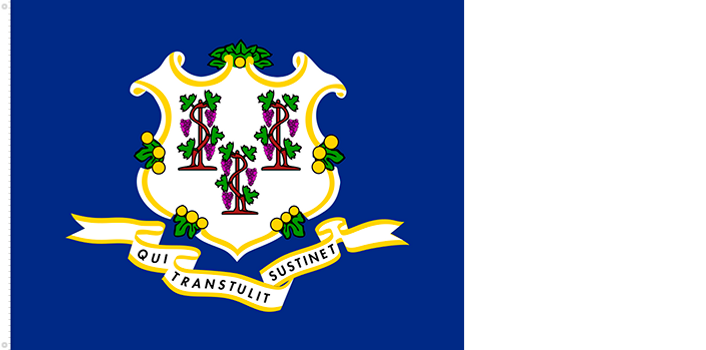
flag of the
State
Connecticut

flag of the
State
Delaware
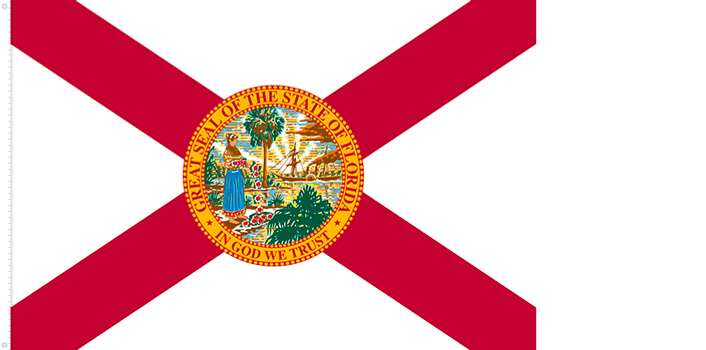
flag of the
State
Florida

flag of the
State
Georgia

flag of the
State
hawaii

flag of the
State
Idaho
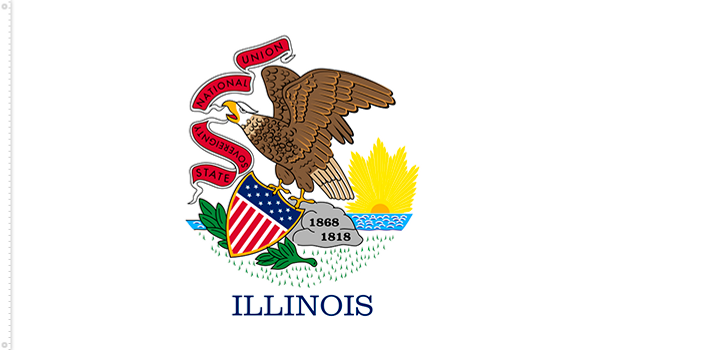
flag of the
State
Illinois

flag of the
State
Indiana

flag of the
State
Iowa

flag of the
State
Kansas

flag of the
State
Kentucky

flag of the
State
louisiana

flag of the
State
Maine

flag of the
State
Maryland

flag of the
State
Massachusetts

flag of the
State
Michigan

flag of the
State
Minnesota

flag of the
State
mississippi

flag of the
State
Missouri

flag of the
State
Mountain

flag of the
State
Nebraska

flag of the
State
Nevada

flag of the
State
New Hampshire

flag of the
State
New Jersey

flag of the
State
new Mexico

flag of the
State
New York

flag of the
State
North Carolina

flag of the
State
North Dakota

flag of the
State
Ohio
flag of the
State
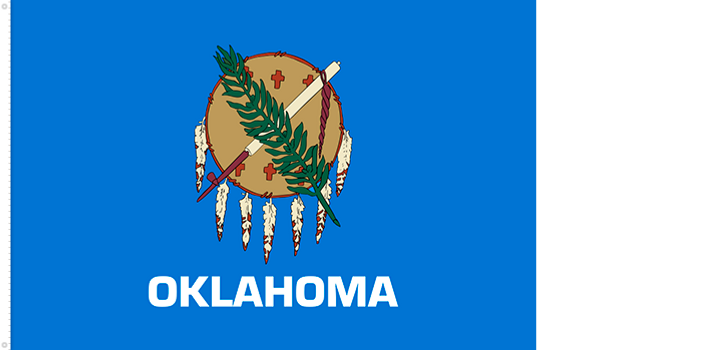
Oklahoma

flag of the
State
Oregon

flag of the
State
pennsylvania

flag of the
State
Rhode Island

flag of the
State
South Carolina

flag of the
State
South Dakota

flag of the
State
Tennessee
flag of the
State
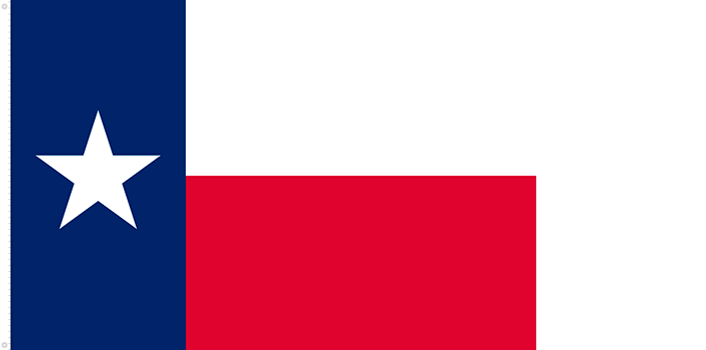
Texas

flag of the
State
Utah

flag of the
State
Vermont

flag of the
State
Virginia

flag of the
State
Washington

flag of the
State
West Virginia

flag of the
State
Wisconsin
flag of the
State
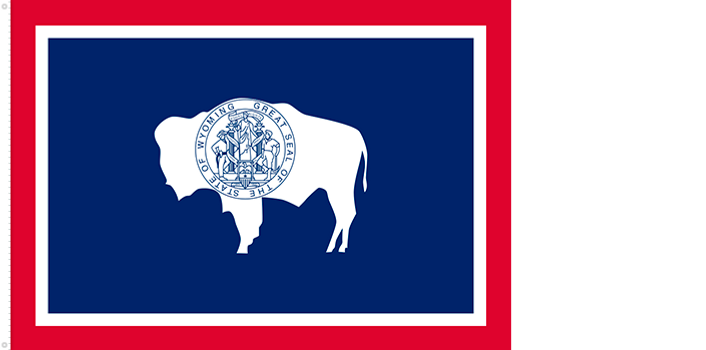
Wyoming
SHIELD
The Great Seal of the United States of America is a document certification sign used in the United States, a country that does not have a proper heraldic shield. The composition features the national motto: E Pluribus Unum , which means "out of many, one" in Latin.
On June 20, 1782, the United States Congress approved the current and only model in force until now. which was presented by a commission appointed for its creation chaired by Benjamin Franklin and its elements were devised by Charles Thompson.
OBVERSE
The design on the obverse (or front) of the seal is the United States coat of arms. The shield, which is sometimes incorrectly drawn, has two main differences from the American flag; First of all, it has no stars on the azure boss. Second, unlike the flag, the outer stripes are white, not red; in order not to violate the heraldic rule of tincture.
The defender of the shield is a bald eagle with spread wings. From the perspective of the eagle, which holds a group of 13 arrows in its left talon, (referring to the original 13 states) and an olive branch in its right talon, symbolizing that the United States has "a strong desire for peace, but he will always be ready for war." Although not specified in the law, the olive branch is usually represented with 13 leaves and 13 olives, again representing the original 13 states. The eagle has its head turned towards the olive branch on its right side, symbolizing a preference for peace. In its beak, the eagle carries a scroll with the motto E pluribus unum ("Out of many, one"). Above his head appears a glory with 13 stars on an azure field. The 13 stars above the eagle are arranged in rows of 1-4-3-4-1, forming a 6-pointed star.

BACK
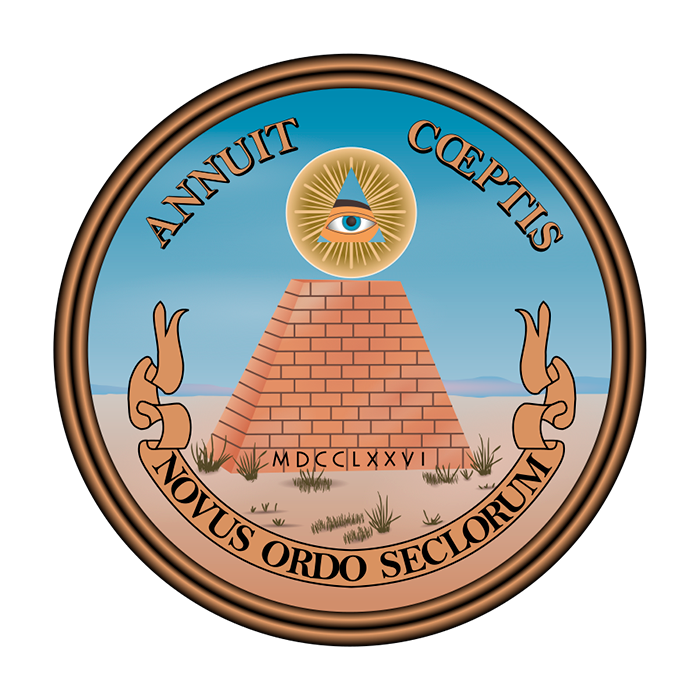
A truncated pyramid is shown on the reverse. Above the pyramid is an eye in a triangle, surrounded by a glory.
The pyramid is conventionally shown as a set of 13 layers to refer to the original 13 States. The Roman numeral MDCCLXXVI (in relation to 1776, the year of the Declaration of Independence of the United States) is inscribed at the base of the pyramid.
Two mottos appear: Annuit cœptis ("Approve things that have been started") and Novus ordo seclorum ("New Order of the Centuries"). Rare is the time that the reverse of the Great Seal is depicted. However, it appears on the left side of the back of dollar bills.